
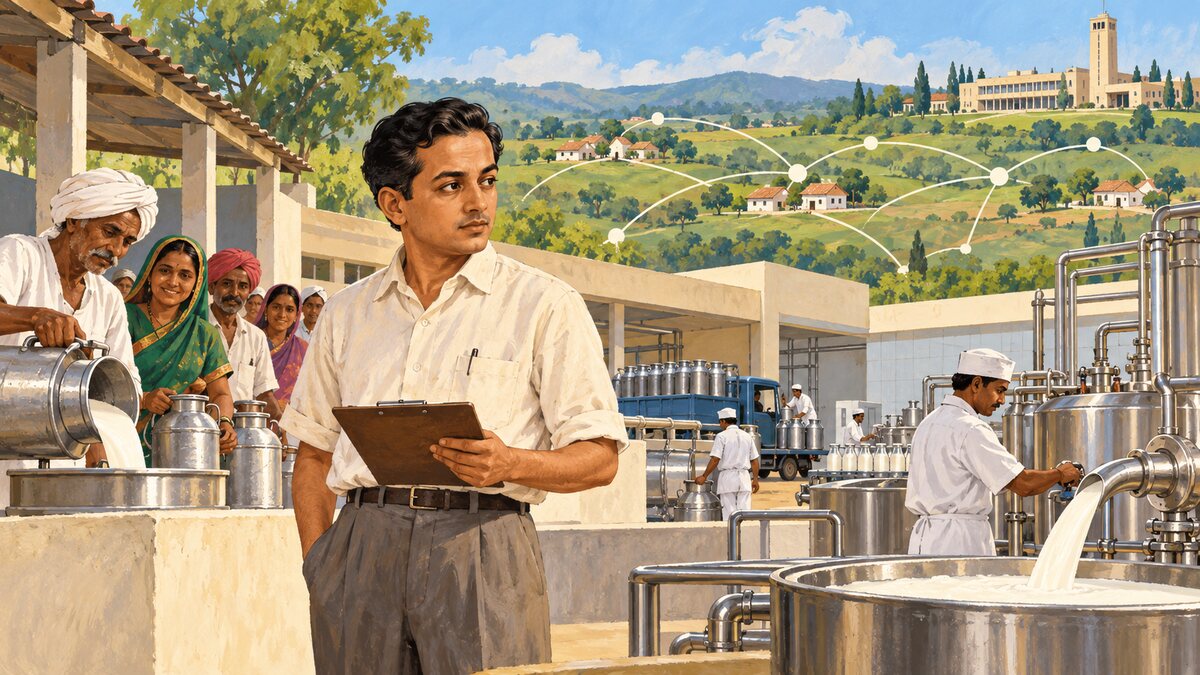
బ్రాండ్ కంటే పెద్దది—రైతు యాజమాన్య వ్యవస్థ
Dr. Verghese Kurien కథను కేవలం “Amul success story”గా చెప్పడం అసంపూర్ణం. Kaira cooperativeను రైతులే own చేసే enterpriseగా professionalize చేయడం, దాన్ని దేశవ్యాప్త dairy networkగా scale చేయడం, management institutionsను నిర్మించడం—ఇవి ఆయన అసలు entrepreneurial contribution.
నేపథ్యం: dairyకు ముందున్న engineer
1921 నవంబర్ 26న కేరళలో జన్మించిన Kurien, science మరియు mechanical engineeringలో విద్యనభ్యసించి, government scholarshipపై Michigan State Universityలో master’s degree పూర్తి చేశారు. Dairy engineeringలో కూడా specialised training పొందారు. 1949లో Government Research Creameryలో dairy engineerగా Anandకు పంపబడ్డారు. అది ఆయన మొదటి ఎంపిక కాదు; కానీ అక్కడ రైతుల సమస్య ఆయన careerను మార్చింది.
Idea ఆయనది ఒక్కరది కాదు—కానీ system-building ఆయన బలం
1946లో Kheda రైతులు middlemen, arbitrary procurement pricesకు వ్యతిరేకంగా Tribhuvandas Patel నాయకత్వంలో cooperativeను ఏర్పాటు చేశారు. Sardar Vallabhbhai Patel ఆ ఉద్యమానికి మద్దతిచ్చారు. కాబట్టి Amul cooperativeను Kurien స్థాపించాడని చెప్పడం సరైంది కాదు. ఆయన పాత్ర: రైతుల సంస్థకు processing technology, professional management, product development, marketing మరియు scaleను కలపడం.
ప్రారంభ సవాలు
రైతుల వద్ద milk ఉంది; కానీ processing, cold chain, quality control, urban market access బలహీనంగా ఉన్నాయి. Private tradersకు bargaining power ఎక్కువ. Kurien మరియు cooperative leadership, producers చేతిలో ownershipను ఉంచి professionals ద్వారా enterpriseను నడిపే modelను నిర్మించారు. ఇది charity కాదు; farmersకు market power ఇచ్చే business architecture.
Turning point: Anand model నుంచి national mission
Kaira cooperative విజయం తర్వాత 1965లో National Dairy Development Board (NDDB) ఏర్పడింది; Kurien దాని Founder Chairmanగా 1998 వరకు పనిచేశారు. 1970లో ప్రారంభమైన Operation Flood, village cooperativesను urban marketsతో National Milk Grid ద్వారా అనుసంధానించింది. Programme మూడు phasesలో సాగి milk production, rural incomes, consumer supply అనే లక్ష్యాలను కలిపింది.
Scale వెనుక మూడు design choices
- Ownership: raw material ఇచ్చే రైతే cooperative member.
- Professional management: sentimentతో కాదు—quality, logistics, finance, marketingతో enterprise నడపడం.
- Federated scale: village society నుంచి district union, state federation, national support institution వరకు layers.
Setbacksకు response
Seasonal milk supply, limited processing capacity, established commercial interests, urban distribution, imported dairy-aid dependency వంటి సమస్యలను ఒకేసారి ఎదుర్కోవాల్సి వచ్చింది. Operation Flood foreign food aidను permanent dependencyగా కాక, domestic cooperative infrastructureకు financeగా మార్చింది. Kurien response quick expansion మాత్రమే కాదు; veterinary services, feed, artificial insemination, member education, research వంటి supporting systemsను నిర్మించడం.
Institution builder
Kurien 1979లో Institute of Rural Management Anand (IRMA)ను స్థాపించారు. Cooperativesకు technology సరిపోదు; underserved economy కోసం trained managers అవసరమని ఆయన గ్రహించారు. NDDB, GCMMF leadership, IRMA, dairy research and training—ఇవి ఒక brand చుట్టూ కాక ecosystem చుట్టూ నిర్మించిన సంస్థలు.
Success principle
Value chainలో ఉత్పత్తిదారుడిని చివరి supplierగా కాక యజమానిగా ఉంచండి. Enterprise లాభం market access, technology, trust వల్ల వస్తుంది; కానీ governanceలో beneficiaryకి voice లేకపోతే scale exploitationగా మారవచ్చు.
యువతకు పాఠాలు
- మీరు మొదట ఇష్టపడని assignment కూడా జీవిత లక్ష్యాన్ని చూపవచ్చు.
- Existing community ideaను గౌరవించి, మీ skillతో బలపరచడం కూడా entrepreneurship.
- Brandను నిర్మించడం కంటే institutionను నిర్మించడం దీర్ఘకాల ప్రభావం ఇస్తుంది.
- Scaleకు ముందు ownership, incentives, governanceను స్పష్టంగా design చేయాలి.
- Technology విలువ అది weakest participantకు bargaining power ఇచ్చినప్పుడే పెరుగుతుంది.
ఆలోచనకు ప్రశ్న
మీరు ప్రారంభించాలనుకునే enterpriseలో customers మాత్రమే ఉన్నారా—లేక value సృష్టించే చిన్న producersను కూడా ownersగా మార్చే అవకాశం ఉందా?
English version
Verghese Kurien’s achievement was larger than building a dairy brand. The Kaira cooperative had already been formed by farmers under Tribhuvandas Patel, with Sardar Patel’s support. Kurien’s contribution was to combine farmer ownership with processing technology, professional management, marketing and scalable institutions.
Born in 1921 and trained in science, mechanical engineering and dairy engineering, he arrived in Anand as a government dairy engineer in 1949. The assignment was not his original ambition, but the farmers’ lack of market power gave his career a new purpose.
As Founder Chairman of NDDB from 1965, he helped design Operation Flood, launched in 1970. Village cooperatives were linked to urban markets through a national milk grid. The model combined producer ownership, professional management and federated scale.
His response to constraints was institutional: processing plants, quality systems, veterinary and feed services, research, member education and, in 1979, IRMA to train managers for rural organisations.
Success principle
Do not leave the producer at the weakest end of the value chain. Give the producer ownership, professional support and a route to the market.
Youth lesson
Entrepreneurship is not always about inventing alone. It can mean respecting a community’s existing initiative and building the systems that allow it to scale without losing ownership.
Reflective question
Can your enterprise turn small producers from suppliers into genuine stakeholders?
Sources
- NDDB — Dr. Verghese Kurien
- NDDB — Operation Flood
- IRMA — About the Founder
- World Food Prize — 1989 Laureate biography
I Reflect. You Respond.
#MVRTalks #RojukoEntrepreneur #VergheseKurien #AmulModel #Cooperatives #InstitutionBuilding #YouthLessons #IReflectYouRespond