
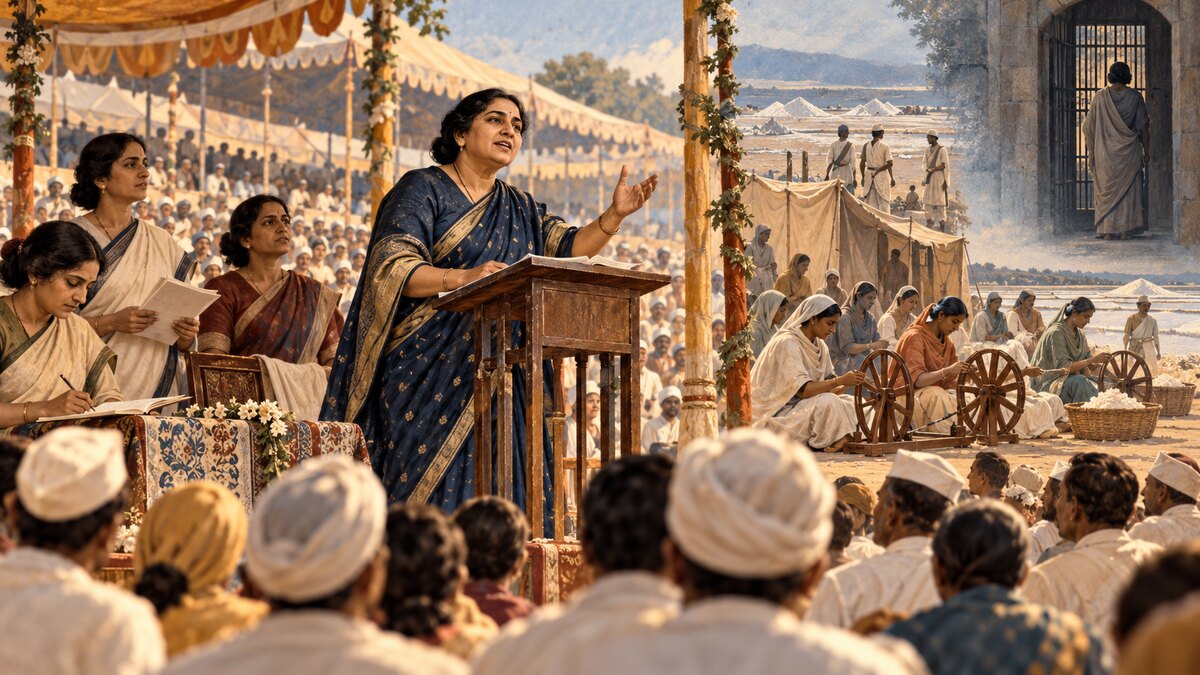
రోజుకో స్వాతంత్ర్య సమరయోధుని కథ — Day 9
సరోజినీ నాయుడు: కవిత్వం నుంచి ఉద్యమ నాయకత్వం వరకు
సరోజినీ చట్టోపాధ్యాయ 1879 ఫిబ్రవరి 13న Hyderabadలో జన్మించారు. ఆమె తండ్రి Aghorenath Chattopadhyay Nizam’s College principal, విద్యా–సామాజిక సంస్కరణలను ప్రోత్సహించిన వ్యక్తి; తల్లి Varada Sundari కవయిత్రి. చిన్న వయసులోనే భాష, కవిత్వంపై ప్రతిభ చూపిన Sarojini Madrasలో చదివి, తరువాత scholarshipతో King’s College London, Girton College Cambridgeలో విద్యనభ్యసించారు.
Formative influence: భారతీయ స్వరాన్ని కనుగొనడం
Englandలో ఆమె రచనా ప్రతిభ గుర్తింపుపొందింది. British critic Edmund Gosse ఆమెను western imitation నుంచి భారతీయ దృశ్యాలు, ప్రజలు, రంగులు, rhythms వైపు మళ్లమని ప్రోత్సహించినట్టు Ministry of Culture repositoryలో వివరించబడింది. ఈ literary shift ఆమె రాజకీయ జీవితానికి కూడా సంకేతం: borrowed languageలో approval కోరడం కంటే, భారత అనుభవాన్ని తన స్వరంగా మార్చడం.
Freedom movementలో ప్రవేశం
1905 Bengal partition తరువాత national movementలో ఆమె పాత్ర పెరిగింది. Gopal Krishna Gokhale, Rabindranath Tagore, Annie Besant, Mahatma Gandhi వంటి నాయకులతో సంబంధాలు ఆమె public workను విస్తరించాయి. 1915–18 మధ్య nationalism, social welfare, women’s empowermentపై దేశవ్యాప్తంగా ప్రసంగించారు.
1917లో Women’s Indian Association నిర్మాణంలో ఆమె భాగస్వామ్యమయ్యారు. అదే కాలంలో women’s franchise కోసం delegationలో పనిచేశారు. Freedom struggle ఆమెకు colonial rule ముగింపు మాత్రమే కాదు; మహిళల political voice, education, dignityకు కూడా పోరాటం.
Strategy: speechను organisationగా మార్చడం
Sarojini oratorగా ప్రజలను కదిలించగలిగారు; కానీ ఆమె పాత్ర వేదికపైనే ఆగలేదు. Non-Cooperation Movementలో foreign goods boycott, non-violence, self-disciplineను ప్రచారం చేశారు. 1921 Bombay unrest సమయంలో violence తగ్గించేందుకు, గాయపడిన వారికి సహాయం చేసేందుకు పని చేసినట్టు Parliament profile నమోదు చేస్తుంది. Messageకు credibility రావాలంటే crisisలో conduct కూడా అదే విలువలు చూపాలని ఆమె నాయకత్వం తెలిపింది.
1925 Congress presidency
1925 Cawnpore sessionలో ఆమె Indian National Congress presidentగా ఎన్నికయ్యారు. Annie Besant ముందుగా Congressకు మహిళా president అయినప్పటికీ, Sarojini Naidu ఆ పదవిని చేపట్టిన తొలి భారతీయ మహిళ. ఇది symbolic milestone మాత్రమే కాదు; national organisationను నడపగల మహిళా political authorityకు public recognition.
Salt Satyagraha మరియు Dharasana
1930 Civil Disobedience Movementలో పాల్గొని అరెస్టయ్యారు. Gandhi అరెస్టు తరువాత Dharasana salt works వద్ద satyagraha కొనసాగింది. Ministry of Culture Dharasana memorial accountలో Abbas Tyabji అరెస్టు తరువాత Sarojini Naidu leadershipలో volunteers salt pitsకు చేరి, police cordon ముందు కూర్చుని spinning చేశారని నమోదు చేసింది. తరువాతి దశల్లో protestersపై severe police violence జరిగింది.
ఆమె strategy provocationకు ప్రతిగా retaliation కాదు; witnesses ముందు disciplined non-violenceను నిలబెట్టడం. Physical sufferingను political evidenceగా మార్చిన ఈ విధానం international opinionపై ప్రభావం చూపింది. ఆమెను అరెస్టు చేశారు; కానీ moral contrast movement messageను విస్తరించింది.
Repeated imprisonment and persistence
1931 Round Table Conferenceలో Gandhi, Madan Mohan Malaviyaలతో పాల్గొన్నారు. 1932లో మళ్లీ అరెస్టయ్యారు. Quit India Movement సమయంలో 1942లో detentionకు గురై సుమారు 21 నెలలు జైలులో ఉన్నారని Congress official profile పేర్కొంటుంది. Arrest ఒక exceptional episode కాదు; decades-long public commitmentలో repeated cost.
Poet, organiser, governor
ఆమె కవిత్వం వల్ల “Nightingale of India” లేదా “Bharat Kokila”గా ప్రసిద్ధి పొందారు. కానీ literary fame political workకు substitute కాలేదు; అది communication powerగా మారింది. Independence తరువాత 1947లో United Provinces (ప్రస్తుత Uttar Pradesh) Governorగా బాధ్యత స్వీకరించి, Dominion of Indiaలో Governor పదవిని చేపట్టిన తొలి మహిళగా నిలిచారు. 1949 మార్చి 2న Lucknow Government Houseలో మరణించారు.
Documented fact మరియు popular memory
దృఢ ఆధారాలు ఉన్నవి: 1879 Hyderabad జననం, London–Cambridge education, women’s-rights advocacy, 1925 Congress presidency, Civil Disobedience/Dharasana leadership, repeated imprisonment, United Provinces governorship. జాగ్రత్త: ప్రసిద్ధ quotationsలో wording versions మారుతాయి; అందువల్ల ఈ articleలో unsupported dramatic quotationsను ఉపయోగించలేదు. “Nightingale of India” title widespread public memoryలో ఉన్నప్పటికీ, దానికంటే ఆమె organisational workను కేంద్రంగా చూడాలి.
🌱 మానవ వికాస కోణం
Sarojini Naidu జీవితం talentను public serviceగా మార్చే ప్రక్రియ. Voice ఉండటం మొదటి దశ; ఆ voiceను organisation, courage, consistencyతో కలపాలి. Non-violence passive silence కాదు—provocation మధ్య disciplineను కాపాడే active capacity. Representation కూడా decoration కాదు; decision-making tableలో authority.
🌱 జీవిత పాఠం
ప్రతిభకు అర్థం అది మనకు పేరు తెచ్చినప్పుడు కాదు; మనకు మించిన causeకు స్వరం ఇచ్చినప్పుడు పెరుగుతుంది. అందంగా మాట్లాడటం leadership కాదు—కష్ట సమయంలో కూడా మాటల విలువలను ఆచరించడం leadership.
మూలాలు
One Freedom Fighter a Day — Day 9
Sarojini Naidu: from poetic voice to public leadership
Sarojini Chattopadhyay was born in Hyderabad on 13 February 1879. Her father Aghorenath Chattopadhyay, principal of Nizam’s College, supported education and reform; her mother Varada Sundari was a poet. Sarojini studied in Madras and later at King’s College London and Girton College, Cambridge.
Finding an Indian voice
Her literary talent was recognised in England. A Ministry of Culture account describes how critic Edmund Gosse encouraged her to move from borrowed Western settings toward India’s landscapes, people and rhythms. The shift foreshadowed her politics: transform inherited language into an authentic public voice.
Entry into the movement
Her nationalist engagement intensified after the 1905 partition of Bengal. Associations with Gokhale, Tagore, Annie Besant and Gandhi widened her public work. Between 1915 and 1918 she lectured across India on nationalism, social welfare and women’s empowerment. She helped build the Women’s Indian Association in 1917 and advocated women’s franchise.
Speech as organisation
Naidu was a compelling speaker, but not merely a stage presence. During Non-Cooperation she promoted boycott, non-violence and self-discipline. A Parliament profile records her work to reduce violence and help the injured during the 1921 Bombay unrest. Public language gained credibility through conduct in crisis.
Congress president
At the 1925 Cawnpore session she became President of the Indian National Congress. Annie Besant had earlier been the first woman president; Naidu was the first Indian woman to hold the office. The milestone recognised women’s authority inside national political decision-making.
Dharasana and imprisonment
She joined the 1930 Civil Disobedience Movement and was arrested. After Gandhi and Abbas Tyabji were detained, she helped lead volunteers at the Dharasana salt works. The Ministry of Culture memorial account records volunteers under her leadership reaching the salt pits, sitting before the police cordon and spinning. Severe repression followed in later phases.
The strategy was disciplined non-violence before witnesses, turning physical suffering into political evidence. She later attended the 1931 Round Table Conference, was arrested again in 1932, and spent about 21 months in detention after her 1942 Quit India arrest, according to the Congress profile.
Poet, organiser and governor
Her poetry earned the name “Nightingale of India,” but literary fame became a tool of communication rather than a substitute for organisation. In 1947 she became Governor of the United Provinces, the first woman to hold a governorship in the Dominion of India. She died at Government House, Lucknow, on 2 March 1949.
Fact and public memory
Her birth, education, franchise advocacy, 1925 presidency, Civil Disobedience role, repeated imprisonment and governorship are well documented. Famous quotations sometimes circulate in varying wording; this article therefore avoids unsupported dramatic lines. Her organisational work deserves at least as much attention as the poetic title by which she is remembered.
🌱 Human Development Perspective
Naidu’s life shows how talent becomes public service. A voice needs organisation, courage and consistency. Non-violence is not passive silence; it is the active capacity to preserve discipline under provocation. Representation is not decoration—it is authority at the decision-making table.
🌱 Life Lesson
Talent grows in meaning when it gives voice to a cause larger than personal recognition. Eloquence becomes leadership only when conduct under pressure carries the same values as the speech.
Sources
I Reflect. You Respond.
#MVRTalks #FreedomFighters #SarojiniNaidu #IndianNationalCongress #Dharasana #WomenInFreedomMovement #CivilDisobedience #HumanDevelopment #IReflectYouRespond