
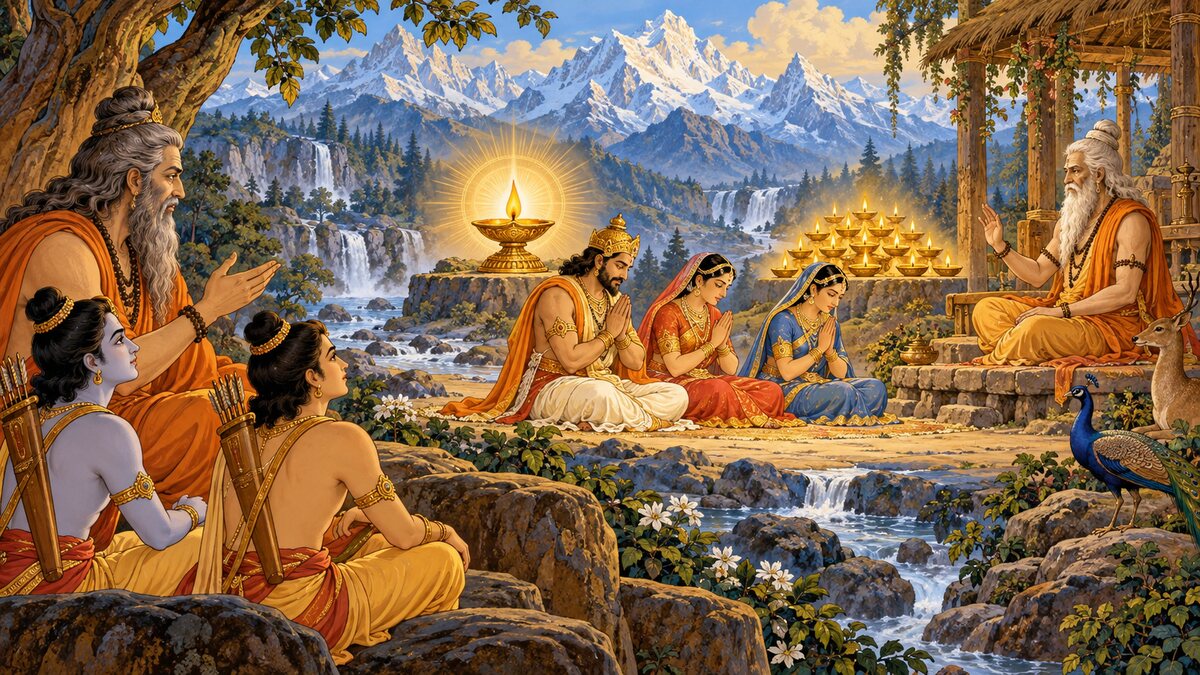
కథ — విశ్వామిత్రునిగా నేను చెబుతున్నాను
స్కందుని కథను రాముడికి చెప్పిన తరువాత, ఇక్ష్వాకు వంశంలోని మరో పురాతన ఘట్టాన్ని ప్రారంభించాను. “రామా, ఒకప్పుడు అయోధ్యను సగరుడు అనే ధర్మాత్ముడైన రాజు పాలించేవాడు. అతనికి సంతానం లేదు; వంశం కొనసాగాలనే కోరిక అతని మనసును కలచేది,” అన్నాను.
సగరునికి ఇద్దరు భార్యలు—కేశిని, సుమతి. వారిద్దరితో కలిసి హిమవంతంలోని భృగుప్రస్రవణ పర్వతానికి వెళ్లి దీర్ఘ తపస్సు చేశాడు. వారి నిబద్ధతకు సంతోషించిన భృగుమహర్షి ఒక అసాధారణ వరం ఇచ్చాడు.
“మీ ఇద్దరిలో ఒకరికి వంశాన్ని కొనసాగించే ఒక కుమారుడు పుడతాడు. మరొకరికి అరవై వేల మంది కుమారులు పుడతారు. ఎంపిక మీది,” అన్నాడు మహర్షి.
కేశిని వంశాన్ని నిలబెట్టే ఒక కుమారుణ్ణి కోరుకుంది. సుమతి అనేకమంది కుమారులను కోరుకుంది. కాలం గడిచిన తరువాత కేశినికి అసమంజుడు జన్మించాడు; సుమతికి అనేకమంది కుమారులు పుట్టారు.
కానీ సంఖ్య లేదా వంశపారంపర్యం మాత్రమే గుణానికి హామీ ఇవ్వలేదు. అసమంజుడు ప్రజల పిల్లలను సరయూ నదిలోకి విసిరి బాధించేవాడని కథ చెబుతుంది. ప్రజల భయం, దుఃఖాన్ని చూసిన సగరుడు కఠినమైన నిర్ణయం తీసుకున్నాడు—తన స్వంత కుమారుడినే రాజ్యం నుంచి బహిష్కరించాడు.
అసమంజుని కుమారుడు అంశుమంతుడు మాత్రం ధైర్యం, వినయం, ప్రజాభిమానంతో ఎదిగాడు. ఒక తరం చేసిన తప్పు తరువాతి తరాన్ని తప్పనిసరిగా నిర్వచించదని అతని స్వభావం చూపింది.
గమనిక: ఇది వాల్మీకి రామాయణం బాలకాండ సర్గ 38లో విశ్వామిత్రుడు చెప్పిన పురాణ వంశకథ ఆధారంగా మొదటి వ్యక్తి పునఃకథనం. అరవై వేల సంఖ్యను epic narrativeలోని ప్రతీకాత్మక/సాంప్రదాయ సంఖ్యగా చదవాలి; ఆధునిక చరిత్ర లేదా జీవశాస్త్ర claimగా కాదు.
🌱 మానవ వికాస కోణం
సగరుని కథ మూడు స్థాయిలలో leadershipను పరీక్షిస్తుంది. మొదట, దీర్ఘకాల కోరికకు disciplined effort. రెండవది, choicesకు consequences. మూడవది, family loyaltyకన్నా public safetyకి ప్రాధాన్యం ఇచ్చే accountability.
అసమంజుని ప్రవర్తన ఒక uncomfortable truthను చూపుతుంది: మంచి కుటుంబం, గొప్ప అవకాశం, అధికారం—ఏదీ characterకు substitute కాదు. అంశుమంతుడు మరో truthను చూపుతాడు: వారసత్వం మనకు context ఇస్తుంది; conductను మనమే నిర్మించాలి.
నేటి ఉదాహరణలు
- Family enterprise: వారసుడిగా ఉండటం leadershipకు సరిపోదు; competence, ethics అవసరం.
- Public office: దగ్గరి వ్యక్తి తప్పు చేసినా ప్రజా ప్రయోజనాన్ని కాపాడే నిర్ణయం తీసుకోవాలి.
- Education: పెద్ద batch లేదా ఎక్కువ marksకన్నా character, responsibility, contributionను కొలవాలి.
🌱 జీవిత పాఠం
సంఖ్య, పేరు, వంశం మన విజయాన్ని నిర్ణయించవు. స్వభావం లేకుండా scale ప్రమాదం; accountabilityతో కూడిన character మాత్రమే legacy.
English version
The story — narrated by Vishvamitra
After telling Rama the story of Skanda, I spoke of King Sagara of Ayodhya. Childless and longing for heirs, Sagara went with his queens Keshini and Sumati to the Himalayas and performed prolonged austerities.
Sage Bhrigu offered a two-part boon: one queen could have a single son who would continue the line; the other could have sixty thousand sons. Keshini chose one heir, while Sumati chose many sons.
Keshini’s son Asamanja later behaved cruelly toward the people. Sagara put public safety above family attachment and exiled him. Yet Asamanja’s son Anshuman grew into a virtuous and respected prince.
Note: This first-person retelling follows Bala Kanda, Sarga 38. The number sixty thousand belongs to epic cosmology and should not be presented as a modern historical or biological claim.
🌱 Human Development Perspective
Privilege and lineage cannot replace character. Leadership is tested when accountability must apply even to one’s own family or inner circle. Anshuman also shows that one generation’s failure need not determine the next.
🌱 Life Lesson
Scale without character can multiply harm. A worthy legacy is created by conduct, responsibility and the courage to enforce fair standards.
Sources
I Reflect. You Respond.
#MVRTalks #Ramayana #HumanDevelopment #Sagara #Anshuman #Leadership #Accountability #LifeLessons #IReflectYouRespond