
రామాయణంలో మానవ వికాసం — రోజు 14
నేను విశ్వామిత్రుణ్ని: రాముని ప్రశ్నకు గంగ కథను ప్రారంభించాను
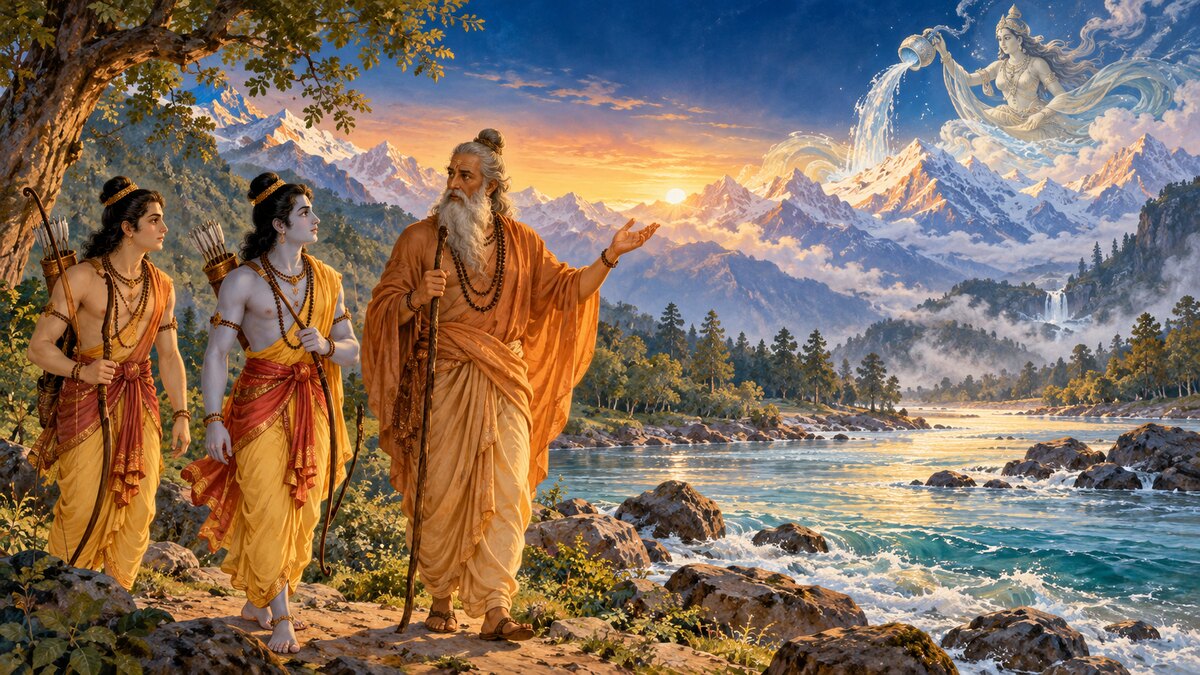
మరుసటి ఉదయం ప్రయాణం కొనసాగించి మేము గంగానది తీరానికి చేరాము. అక్కడ ఋషులు నివసించే పవిత్ర ప్రదేశంలో నిలిచాము. రాముడు ఆ విశాల ప్రవాహాన్ని గమనించాడు. తరువాత నన్ను అడిగాడు: “భగవన్, ఈ గంగ మూడు మార్గాల్లో ఎలా ప్రవహిస్తోంది? సముద్రానికి ఎలా చేరింది? దాని కథను వినాలనుకుంటున్నాను.”
అతని ప్రశ్న నాకు ఆనందం ఇచ్చింది. చూసిన దాన్ని కేవలం చూసి వెళ్లకుండా, దాని మూలం తెలుసుకోవాలనే కోరిక జ్ఞానానికి ద్వారం. నేను కథను ప్రారంభించాను.
పర్వతాలకు అధిపతి హిమవంతుడు. అతని భార్య మేనా. వారికి ఇద్దరు కుమార్తెలు జన్మించారు. పెద్ద కుమార్తె గంగ; చిన్న కుమార్తె ఉమా. దేవతలు లోకాల మేలుకోసం గంగను కోరారు. హిమవంతుడు వారి అభ్యర్థనను అంగీకరించి గంగను వారికి ఇచ్చాడు. ఆమె దివ్యలోకాలకు చేరి అక్కడ ప్రవహించింది.
ఉమా మాత్రం తపస్సుకు అంకితమైంది. ఆమెను తరువాత రుద్రునికి ఇచ్చారు. ఈ విధంగా హిమవంతుని ఇద్దరు కుమార్తెల కథ భూమి, దివ్యం, తపస్సు—మూడు ప్రపంచాలను కలిపింది. నేను రామునికి ఇంకా చెప్పాల్సిన గంగావతరణ కథ ఉందని సూచిస్తూ ఆ మొదటి భాగాన్ని ముగించాను.
సంప్రదాయ గమనిక: ఈ భాగం వాల్మీకి రామాయణ బాలకాండ 35వ సర్గను మాత్రమే అనుసరిస్తుంది. గంగ యొక్క threefold sacred course, దేవతలకు ఇవ్వబడటం ఇతిహాస–పౌరాణిక వర్ణన. భగీరథుని తరువాతి కథను ఈ episodeలో ముందుకు తీసుకురాలేదు.
🌱 మానవ వికాస కోణం
రాముని ప్రశ్నే ఈ episodeకు కేంద్రం. మంచి విద్యార్థి answer కోసం మాత్రమే అడగడు; తన ముందు కనిపిస్తున్న ప్రపంచం ఎలా ఏర్పడిందో అడుగుతాడు. విశ్వామిత్రుడు వెంటనే short answer ఇవ్వకుండా lineage, place, relationshipతో కూడిన contextను అందిస్తాడు.
నేటి ఉదాహరణలు
- Classroomలో “ఎందుకు?” అని అడిగే విద్యార్థిని అడ్డుకోకుండా evidence, context వెతకనివ్వాలి.
- ఒక riverను resourceగా మాత్రమే కాక ecology, culture, community memoryగా చూడాలి.
- Leadersకు curiosity ఉంటే policy surface symptom వద్ద ఆగకుండా root causeను చేరుతుంది.
🌱 జీవిత పాఠం
గమనించడం జ్ఞానానికి ఆరంభం; సరైన ప్రశ్న అడగడం దానికి దిశ. ప్రశ్న చిన్నదైనా, దానికి ఇచ్చే సమగ్ర సమాధానం మనిషిని తనకంటే పెద్ద కథతో అనుసంధానిస్తుంది.
మూలాలు
Ramayana for Human Development — Day 14
I am Vishvamitra: beginning the story of the Ganga
The next morning we continued our journey and reached the Ganga. At the sacred river, Rama observed the vast current and asked me how it followed three courses, how it reached the ocean, and what its story was.
His question pleased me. Knowledge begins when someone refuses to pass a familiar sight without asking about its origin. I began with Himavan, lord of mountains, and his wife Mena. They had two daughters: Ganga, the elder, and Uma, the younger.
The gods requested Ganga for the welfare of the worlds. Himavan consented, and she ascended to the celestial realm. Uma devoted herself to austerity and was later given to Rudra. Thus the daughters of the mountain linked earth, the divine realm and disciplined spiritual striving. The further descent of Ganga remained a story yet to be told.
Tradition note: This episode follows Bala Kanda Sarga 35 only. Ganga’s threefold sacred course and her transfer to the gods belong to the epic narrative; Bhagiratha’s later story is not advanced here.
🌱 Human Development Perspective
Rama’s question drives the episode. A good learner asks not merely for an answer but how the visible world came to be. Vishvamitra responds with context—lineage, place and relationship—rather than a disconnected fact.
Present-day relevance
Students who ask “why?” should be guided toward evidence and context. A river is not merely a resource; it is ecology, community and cultural memory. Curiosity helps leaders move beyond symptoms toward root causes.
🌱 Life Lesson
Observation begins knowledge; the right question gives it direction. A small question can connect a learner to a story larger than the self.
Sources
I Reflect. You Respond.
#MVRTalks #Ramayana #BalaKanda #Ganga #Vishvamitra #Curiosity #HumanDevelopment #LifeLesson #IReflectYouRespond