
బాల్యం, విద్య, తొలి మలుపు
మోహన్దాస్ కరమ్చంద్ గాంధీ 2 అక్టోబర్ 1869న పోర్బందర్లో జన్మించారు. న్యాయవిద్య కోసం లండన్కు వెళ్లి, barristerగా తిరిగివచ్చారు. భారతదేశంలో ప్రారంభ న్యాయవృత్తి ఆశించినంత సులభంగా సాగలేదు. 1893లో ఒక legal assignmentతో South Africa వెళ్లడం ఆయన జీవితాన్ని మలిచింది.
దక్షిణాఫ్రికాలో భారతీయులపై racial discriminationను ఆయన ప్రత్యక్షంగా అనుభవించారు. Pietermaritzburg railway stationతో అనుసంధానించబడిన అవమానకర ఘటన ఆయన public lifeకు ఒక ప్రధాన మలుపుగా గుర్తించబడుతుంది. అయితే గాంధీ రూపాంతరం ఒక్క రాత్రిలో జరగలేదు. 21 సంవత్సరాల South African అనుభవంలో petition, organisation, community living, jail, negotiation, nonviolent resistance అన్నీ కలిసి satyagraha అనే పద్ధతిని పరిపక్వం చేశాయి.
భారతదేశానికి తిరుగు: ముందుగా చూడటం, వినడం
గాంధీ 9 జనవరి 1915న భారతదేశానికి తిరిగివచ్చారు. వెంటనే దేశవ్యాప్త నాయకత్వం ప్రకటించలేదు. గోపాలకృష్ణ గోఖలే సూచనతో భారతీయ పరిస్థితులను అర్థం చేసుకున్నారు. 1917 Champaranలో indigo cultivators సమస్య ఆయన తొలి ప్రధాన భారతీయ satyagrahaగా నిలిచింది.
Champaranలో అధికారుల leave orderను పాటించకుండా, రైతుల బాధను పరిశీలించడం తన higher duty అని courtలో వివరించారు. ప్రభుత్వం caseను ఉపసంహరించుకుంది; inquiry కొనసాగింది. ఇది ordinary peasantsకు colonial authorityను ప్రశ్నించవచ్చనే భావన ఇచ్చింది. తరువాత Ahmedabad mill dispute, Kheda peasants సమస్యల్లో negotiation, fasting, tax resistance వంటి పద్ధతులు ఉపయోగించారు.
Mass movement: Non-Cooperation మరియు క్రమశిక్షణ పరీక్ష
1920–22 Non-Cooperation Movement ద్వారా schools, titles, councils, foreign clothపై boycottతో స్వరాజ్యాన్ని ప్రజల దైనందిన చర్యగా మార్చారు. Khadi, spinning wheel ఆయనకు వస్త్రం లేదా చిహ్నం మాత్రమే కాదు—self-reliance, labour dignity, decentralised productionకు సంబంధించిన programme.
1922 Chauri Chauraలో protest violenceగా మారి పోలీస్ స్టేషన్ దహనమైంది; పోలీసు సిబ్బంది మరణించారు. గాంధీ movementను ఉపసంహరించారు. ఈ నిర్ణయం అప్పట్లోనూ, తరువాతనూ తీవ్రమైన debateకు కారణమైంది. ఆయన దృష్టిలో nonviolence strategy మాత్రమే కాదు, method యొక్క moral condition. విమర్శకుల దృష్టిలో nationwide momentumను ఒక్కసారిగా ఆపడం costly mistake. ఈ విభేదాన్ని దాచకుండా చూడటం గాంధీ నాయకత్వాన్ని అర్థం చేసుకోవడానికి అవసరం.
ఉప్పుతో సామ్రాజ్యాన్ని సవాలు చేసిన Dandi March
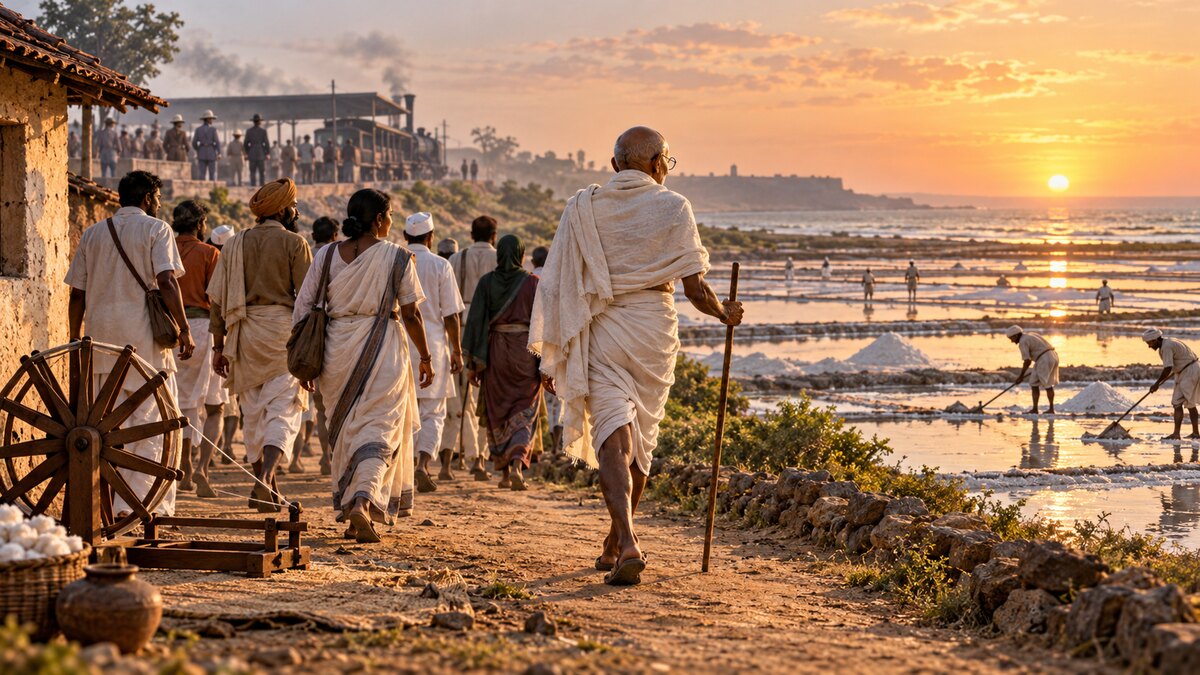
12 మార్చి 1930న Sabarmati Ashram నుంచి గాంధీ సహచరులతో Dandi వైపు నడక ప్రారంభించారు. 6 ఏప్రిల్న సముద్రతీరంలో ఉప్పు చట్టాన్ని ఉల్లంఘించారు. ఉప్పు ప్రతి ఇంటికీ అవసరం; అందుకే tax injusticeను elite debate నుంచి daily lifeకు తీసుకువచ్చింది. March మార్గంలోని గ్రామాలు, disciplined walking, ముందుగా ప్రకటించిన ఉద్దేశం—ఇవన్నీ symbolic protestను mass civic educationగా మార్చాయి.
British repression, arrests వచ్చినా Civil Disobedience విస్తరించింది. 1931 Gandhi–Irwin Pact తరువాత Round Table Conferenceలో పాల్గొన్నారు. వెంటనే స్వాతంత్ర్యం రాలేదు; కానీ colonial legitimacyకు పెద్ద సవాలు ఏర్పడింది.
Quit India, జైలు, వ్యక్తిగత నష్టం
1942లో “Quit India” పిలుపు తరువాత గాంధీతో పాటు Congress నాయకత్వాన్ని వెంటనే అరెస్టు చేశారు. Aga Khan Palaceలో నిర్బంధంలో ఉన్నప్పుడు ఆయన భార్య Kasturba Gandhi 1944లో మరణించారు; Mahadev Desai కూడా అక్కడే మరణించారు. ఉద్యమం పలు చోట్ల leaderless, sometimes violent రూపాలు తీసుకుంది. గాంధీ జైలులోనే కొనసాగారు; health crisis, fast, isolationను ఎదుర్కొన్నారు.
స్వాతంత్ర్యం దగ్గర—విభజన బాధ
గాంధీ Hindu–Muslim unityను తన public lifeలో కేంద్ర విలువగా చూశారు. 1947 స్వాతంత్ర్యం Partitionతో వచ్చింది. Delhi celebrationsలో ప్రధానంగా ఉండటానికి బదులు, communal violenceను తగ్గించేందుకు Bengal, తరువాత Delhiలో ప్రజల మధ్య పనిచేశారు; fasts చేశారు. 30 జనవరి 1948న New Delhiలో Nathuram Godse ఆయనను హత్య చేశాడు.
వ్యూహం, నాయకత్వం, పరిమితులు
గాంధీ strength మూడు స్థాయిల్లో కనిపిస్తుంది: moral languageను ordinary actionగా మార్చడం; dispersed ప్రజలను disciplined campaignగా క్రమబద్ధీకరించడం; sufferingను retaliationగా కాక public persuasionగా ఉపయోగించడం. ఆయన newspapers, ashrams, marches, fasts, negotiations—అన్నీ ఒక communication systemలో భాగాలు.
అదే సమయంలో ఆయనపై గంభీర విమర్శలు ఉన్నాయి: casteపై ఆయన అభిప్రాయాల పరిణామం మరియు Ambedkarతో విభేదాలు; industrialisationపై సందేహాలు; personal experimentsపై ethical questions; movementsను central moral authorityతో నడిపిన తీరు. గాంధీని గౌరవించడం అంటే ప్రశ్నించకుండా దేవత్వం ఇవ్వడం కాదు. ఆయన documented achievements, failures, debatesను కలిసి చదవాలి.
ఎలా గుర్తుంచుకుంటాం?
UNESCO tentative-list documentation satyagraha evolutionను South Africa నుంచి Champaran, Sabarmati, Dandi, Sevagram వరకు ఒక networkగా వివరిస్తుంది. ఆయన nonviolent resistance ప్రపంచ civil-rights movementsపై ప్రభావం చూపింది. భారతదేశంలో Rajghat, Sabarmati, Sevagram, Gandhi Smriti వంటి స్థలాలు ఆయన జీవితం–పద్ధతిని స్మరిస్తున్నాయి. కానీ అతిపెద్ద memorial: disagreementను enemy destructionగా కాక disciplined civic actionగా మార్చగల సామర్థ్యం.
🌱 మానవ వికాస కోణం
- సత్యం practice: మన position తప్పు కావచ్చని ఒప్పుకుని, evidenceతో సవరించుకోవడం.
- Means matter: సరైన goal కోసం తప్పు పద్ధతి ఉపయోగిస్తే, ఫలితం goal స్వభావాన్ని మార్చుతుంది.
- Self-discipline before leadership: ఇతరుల్ని నియంత్రించే ముందు తన వినియోగం, భయం, కోపాన్ని పరిశీలించడం.
- Small symbol, large system: ఉప్పు లేదా చరకా వంటి daily objectను complex injusticeతో అనుసంధానం చేయడం.
- Critique without erasure: మహానుభావుడి కృషిని గౌరవిస్తూ, ఆయన పరిమితులను నిజాయితీగా చదవడం.
🌱 జీవిత పాఠం
ధైర్యం అంటే ఎదుటివారిని నాశనం చేయడం కాదు; అన్యాయానికి సహకరించకుండా నిలబడటం, శిక్షను భరించేందుకు సిద్ధపడటం, తన పద్ధతి తన విలువలకు సరిపోతుందా అని నిరంతరం పరీక్షించుకోవడం. ప్రజాశక్తి ఆగ్రహంతో మొదలవచ్చు; lasting changeకు అది క్రమశిక్షణ, సంస్థ, సంభాషణగా మారాలి.
From Porbandar to satyagraha
Mohandas Karamchand Gandhi was born on 2 October 1869 in Porbandar, trained in law in London, and went to South Africa in 1893. Racial discrimination there pushed him into public action, but satyagraha emerged over years of organising, imprisonment, negotiation and community experiments—not from one dramatic moment alone.
He returned to India on 9 January 1915. Champaran in 1917 became his first major Indian satyagraha. By refusing an order to leave while accepting legal consequences, he turned the peasants' grievance into a public test of authority and conscience.
Mass politics and moral discipline
Non-Cooperation made freedom part of everyday conduct through boycotts, khadi and institution-building. Gandhi's withdrawal of the movement after the violence at Chauri Chaura remains debated: to him nonviolence was a condition of the method; to critics, the withdrawal sacrificed national momentum.
The 1930 Salt March showed his strategic clarity. Salt was universal, the law was easy to understand, and disciplined walking transformed protest into public education. The movement did not bring immediate independence, but it weakened the moral legitimacy of colonial rule.
Prison, Partition and sacrifice
After the 1942 Quit India call, Gandhi and other leaders were imprisoned. Kasturba Gandhi and Mahadev Desai died during detention at the Aga Khan Palace. When independence arrived with Partition in 1947, Gandhi worked amid communal violence rather than treating freedom as a completed celebration. He was assassinated in New Delhi on 30 January 1948.
A demanding legacy
Gandhi converted moral vocabulary into repeatable public action: marches, newspapers, ashrams, boycotts, fasting and negotiation. His influence on later nonviolent movements is widely documented. His record must also be read critically—especially debates over caste, industrialisation, personal experiments and concentrated moral authority.
🌱 Human Development Perspective
Truth is not a possession but a discipline of correction. Means shape ends. Leadership begins with self-restraint. A simple symbol can explain a complex injustice. And respect for a historical figure should coexist with evidence-based criticism.
🌱 Life Lesson
Courage is the refusal to cooperate with injustice while keeping methods aligned with values. Anger can mobilise people; lasting change requires discipline, organisation, dialogue and the willingness to examine one's own mistakes.
Sources
I Reflect. You Respond.
#MVRTalks #FreedomFighter #MahatmaGandhi #Satyagraha #DandiMarch #IndianIndependence #HumanDevelopment #IReflectYouRespond