
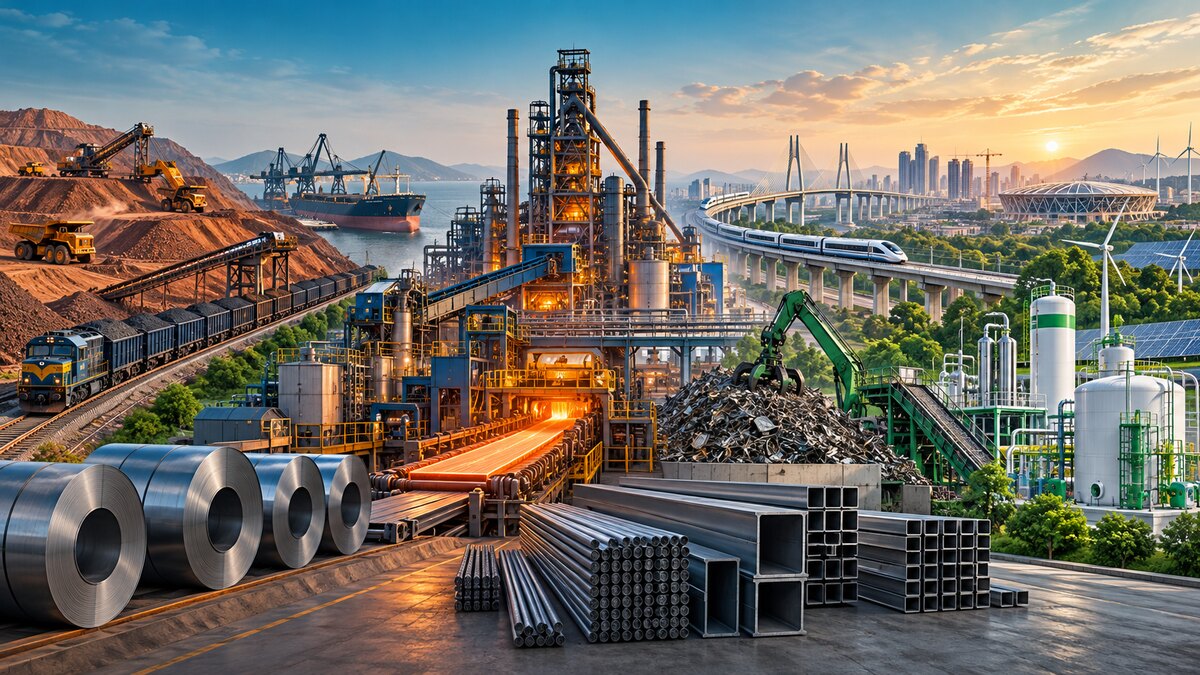
2047 నాటికి భారత ఉక్కు రంగం మూడు రెట్లు పెరుగుతుందా?
భారత ఉక్కు మంత్రిత్వ శాఖ విడుదల చేసిన Draft National Steel Policy–Vision 2047 దేశంలోని crude-steel capacityని ప్రస్తుత సుమారు 220 million tonnes per annum నుంచి 2047 నాటికి 604 million tonnesకు తీసుకెళ్లే లక్ష్యాన్ని ప్రతిపాదించింది. ఇది ఇంకా తుది విధానం కాదు. ప్రజలు, పరిశ్రమ, ఇతర stakeholders తమ సూచనలను 30 October 2026 వరకు పంపవచ్చని మంత్రిత్వ శాఖ తెలిపింది.
ధృవీకరించిన గణాంకాలు: draft ప్రకారం 2047లో crude-steel production 531 MT, finished-steel consumption 505 MT, exports 45 MT, తలసరి steel consumption 302 kgగా ఉండాలనే దిశను ప్రతిపాదించారు. ప్రస్తుతం తలసరి వినియోగం సుమారు 116 kg. అంటే ఈ ప్రణాళిక కేవలం steel mills పెంపు కాదు; housing, railways, roads, renewable-energy equipment, automobiles, machinery, defence మరియు urban infrastructureలో దీర్ఘకాల demand పెరుగుతుందనే అంచనాపై ఆధారపడింది.
604 MT లక్ష్యం ఎందుకు ముఖ్యమైనది?
Steel ఒక intermediate industry. దాని విస్తరణ mining, power, logistics, ports, rail freight, capital goods, construction మరియు downstream manufacturingపై multiplier effect కలిగిస్తుంది. పెద్ద capacity domestic infrastructureకి supply security ఇవ్వవచ్చు; specialty steel మరియు high-value productsలో capability పెరిగితే imports తగ్గి exportsకు అవకాశం ఏర్పడుతుంది.
అయితే capacity ప్రకటించడం production లేదా profitabilityకు సమానం కాదు. Plantsకు భారీ capital, long gestation periods, reliable power, water, rail connectivity మరియు sustained demand అవసరం. 604 MT capacity నిర్మించిన తర్వాత utilisation తక్కువగా ఉంటే debt burden పెరుగుతుంది. అందుకే annual milestones, demand validation మరియు project-level financial discipline అవసరం.
Raw-material challenge: Iron ore ఉంది, coking coal?
Draft 2047 నాటికి iron-ore demandను సుమారు 772 MT, coking-coal demandను 236 MTగా అంచనా వేస్తోంది. భారత్ iron oreలో బలంగా ఉన్నా, steelmakingకు అవసరమైన high-quality coking coalపై విదేశీ ఆధారపడటం ప్రధాన బలహీనత. Overseas assets, long-term contracts, diversified sourcing, domestic coal washing మరియు improved blendingను policy ప్రోత్సహిస్తోంది.
Interpretation: capacity పెరిగే కొద్దీ coal import bill, freight cost మరియు geopolitical supply risk కూడా పెరగవచ్చు. కాబట్టి “more steel”తో పాటు “less imported carbon per tonne” అనే రెండో లక్ష్యం సమానంగా ముఖ్యమైనది. Scrap-based electric furnaces, better beneficiation, material efficiency, green hydrogen మరియు renewable electricity వాణిజ్యపరంగా scale కావాలి.
Carbon intensity: సంఖ్య తగ్గితే మొత్తం ఉద్గారాలు తగ్గుతాయా?
Draft sector’s average emissions intensityని crude steelకు ప్రస్తుతం సుమారు 2.54 tonnes of CO₂ నుంచి 2047 నాటికి 1.54 tonnesకు తగ్గించాలని ప్రతిపాదిస్తోంది—దాదాపు 39% intensity reduction. ఇది net-zero 2070 దిశకు అవసరమైన అడుగు.
కానీ intensity మరియు absolute emissions వేరు. ప్రతి tonneకు emissions తగ్గినా, మొత్తం production మూడు రెట్లు పెరిగితే sector మొత్తం emissions ఇంకా అధికంగా ఉండవచ్చు. అందువల్ల green-steel definitions, plant-level disclosure, scrap availability, renewable power, carbon capture feasibility మరియు hydrogen costపై measurable standards అవసరం.
MSMEs, jobs మరియు consumersపై ప్రభావం
- MSME steel producers: energy-efficient furnaces, pollution control మరియు digital quality systemsకు finance అవసరం.
- Workers: traditional furnace skillsతో పాటు automation, metallurgy, hydrogen safety, maintenance మరియు carbon accountingలో training అవసరం.
- Infrastructure buyers: domestic supply పెరిగితే availability మెరుగవొచ్చు; కానీ ore, coal, power, freight cost వల్ల ధరలు automaticగా తగ్గవు.
- States: mining revenue, industrial clusters, land, water మరియు environmental clearances మధ్య సమతుల్యత కీలకం.
ఏ సూచికలను గమనించాలి?
- Draft consultation తర్వాత final targets లేదా timelines మారుతున్నాయా?
- Capacity additionతో పాటు actual utilisation ఎంత?
- Coking-coal import dependence తగ్గుతుందా లేక volume మరింత పెరుగుతుందా?
- Steel scrap collection, recycling మరియు electric-arc capacity ఎంత వేగంగా పెరుగుతున్నాయి?
- Emissions intensity plant-wise ఎలా కొలుస్తారు, ఎవరు verify చేస్తారు?
నా అభిప్రాయం:
604 MT లక్ష్యం భారత infrastructure–manufacturing ambitionకు సరిపోయేంత పెద్దది. కానీ policy successను capacityతో మాత్రమే కొలవకూడదు. Competitive cost, high-value steel, raw-material resilience, financially healthy producers మరియు నిజంగా కొలిచిన carbon reduction—ఈ ఐదు కలిసి రావాలి. లేకపోతే capacity పెరుగుదల import dependence, debt మరియు absolute emissionsను కూడా పెంచవచ్చు. Draft stageలోనే transparent milestones, independent emissions verification మరియు MSME transition financeను స్పష్టంగా చేర్చడం మంచిది.
Can India nearly triple steel capacity by 2047?
India’s Draft National Steel Policy–Vision 2047 proposes increasing crude-steel capacity from about 220 million tonnes per annum to 604 MT by 2047. It is a consultation draft—not an approved outcome—and comments are invited until 30 October 2026.
Verified facts: The draft envisages 531 MT of crude-steel production, 505 MT of finished-steel consumption, 45 MT of exports and per-capita consumption of 302 kg by 2047, compared with roughly 116 kg now. It also projects iron-ore demand of about 772 MT and coking-coal demand of 236 MT.
The economic opportunity
Steel connects infrastructure, housing, railways, automobiles, machinery, renewable-energy equipment and defence. Greater domestic capacity can improve supply security and deepen downstream manufacturing. Specialty and high-value steel could reduce imports and support exports.
Capacity, however, is not the same as production or viable demand. Steel projects require large capital, reliable power and water, logistics and high utilisation. Poorly sequenced expansion can create excess capacity and debt stress.
The coal and carbon test
The draft proposes reducing average emissions intensity from about 2.54 tonnes of CO₂ per tonne of crude steel to 1.54 tonnes by 2047. That is an important direction, but intensity reduction does not automatically guarantee lower total emissions when output expands sharply. Scrap-based production, renewable power, material efficiency, green hydrogen and credible plant-level measurement will determine the outcome.
Interpretation: The central economic tension is clear: India wants more steel for development while remaining highly exposed to imported coking coal and the carbon intensity of conventional production. Raw-material diversification and overseas assets may improve security, but they do not replace domestic efficiency and cleaner technology.
My assessment:
The 604-MT target is ambitious but meaningful only if India simultaneously builds competitive high-value steel, financially sound capacity, resilient raw-material supply and verifiable decarbonisation. The final policy should publish interim milestones, utilisation metrics, plant-level emissions rules and a workable transition-finance path for smaller producers.
Sources
- Ministry of Steel — Draft National Steel Policy–Vision 2047 and consultation
- Reuters — India unveils draft steel policy, 11 October 2026
- PIB — India’s steel-sector capabilities and policy context, 5 May 2026
I Reflect. You Respond.
#MVRTalks #IndianEconomy #Economy #EconomicAnalysis #SteelPolicy #Manufacturing #Infrastructure #Decarbonisation #IReflectYouRespond