
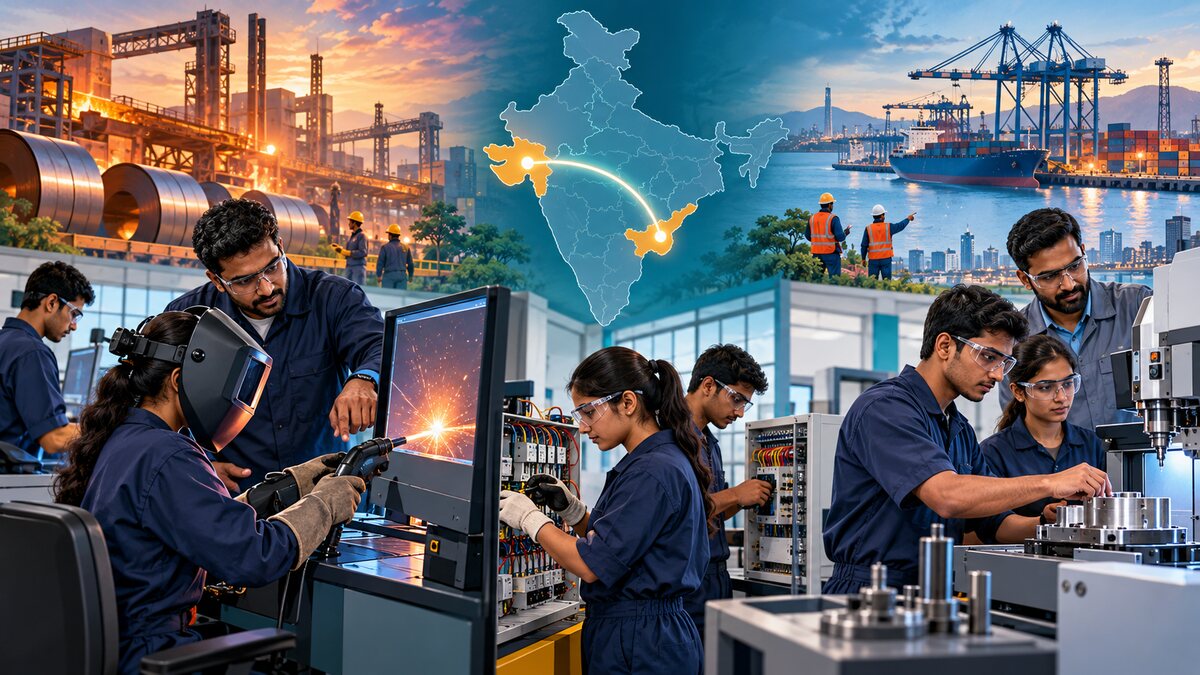
తొమ్మిది ITIలు—₹440 కోట్లు: ఇది భవనాల upgrade మాత్రమేనా?
కేంద్ర నైపుణ్యాభివృద్ధి మంత్రిత్వ శాఖ 12 October 2026న PM-SETU కింద రెండు Shareholders’ Agreements కుదిరినట్లు తెలిపింది. Suratలో ఐదు Government ITIలకు ₹240 కోట్లు, Visakhapatnamలో నాలుగు Government ITIలకు ₹200 కోట్లు—మొత్తం సుమారు ₹440 కోట్ల approved investment. Directorate General of Training, Gujarat–Andhra Pradesh ప్రభుత్వాలు మరియు ArcelorMittal Nippon Steel India ఈ అమలు వ్యవస్థలో భాగస్వాములు.
ధృవీకరించిన నిర్మాణం: ప్రతి clusterకు Special Purpose Vehicle ఏర్పడుతుంది. Industry partnerకు 51% stake, కేంద్రానికి 24.5%, సంబంధిత రాష్ట్రానికి 24.5% ఉంటుంది. Workshops, laboratories, industry-relevant trades, curricula, instructor training మరియు hands-on learningను modernise చేయడం లక్ష్యం. ఇది PM-SETU మొత్తం ₹60,000 కోట్ల frameworkలో ఒక చిన్న కానీ అమలు దశకు చేరిన భాగం.
Industry majority stake ఎందుకు?
ITI curriculum మరియు factory technology మధ్య gap వేగంగా పెరుగుతుంది. Industry equipment, safety standards, production methods, apprenticeship needsను నేరుగా తెలుసుకుంటుంది. 51% stake వల్ల procurement, course design, instructor exposure, placement partnershipsలో accountability పెరగవచ్చు. అయితే public institutionలో industry leadership అనేది public purposeకు substitute కాదు. Admission access, affordable training, labour rights, course portability మరియు transparent outcomesను ప్రభుత్వం కాపాడాలి.
Skills investment ఆర్థిక వ్యవస్థకు ఎలా పనిచేస్తుంది?
- Productivity: సరైన machine-handling, maintenance, quality-control skillsతో firmsకు rework, downtime, accident costs తగ్గవచ్చు.
- Employability: local steel, manufacturing, logistics, electrical and service clustersతో courses align అయితే training-to-job time తగ్గవచ్చు.
- MSME spillover: పెద్ద anchor company standardsను చిన్న suppliersకు తీసుకెళ్లే common labs, short courses ఉపయోగపడవచ్చు.
- Regional mobility: nationally recognised skillsతో students ఒక్క employerకే బంధింపబడకుండా ఇతర firms, statesలో పనిచేయగలగాలి.
Building కాదు—outcomesను కొలవాలి
Lab inauguration ఒక input. ఆర్థిక ఫలితం వేరే. Baseline లేకుండా successను ప్రకటించడం కష్టం. ప్రతి ITI cluster కనీసం completion rate, women’s enrolment, apprenticeship conversion, six- and twelve-month placement, median starting pay, employer retention, certification pass rate మరియు instructor upskillingను ప్రచురించాలి. Placementలో short-term contractను permanent jobగా చూపకూడదు.
Interpretation: ₹440 కోట్లను తొమ్మిది ITIలకు భాగిస్తే ఒక్కో సంస్థకు సమానంగా పంపిణీ అవుతుందని అనుకోవడం తప్పు; official release cluster-level totalsనే ఇస్తోంది. అలాగే approved investment మొత్తం వెంటనే ఖర్చయిందని లేదా jobs ఇప్పటికే సృష్టించబడ్డాయని చెప్పలేం. Agreements అమలు ప్రారంభానికి framework మాత్రమే.
Surat–Visakhapatnamకు ప్రత్యేక అవకాశం
Suratలో manufacturing, textiles, diamond processing, engineering networks; Visakhapatnamలో steel, port logistics, shipbuilding, energy, pharma, services వంటి విభిన్న ecosystems ఉన్నాయి. Course mixను ఒకే steel templateగా పరిమితం చేయకుండా local demandతో పాటు transferable digital, electrical, safety, communication and problem-solving skills ఇవ్వాలి. Apprenticeship seatsను anchor companyకు మాత్రమే కాకుండా supplier networkకు విస్తరించాలి.
Risk checklist
- Equipment కొనుగోలు తర్వాత utilisation ఎంత?
- Instructorలకు recurring industrial training ఉందా?
- Women and disadvantaged studentsకు safe hostels, transport, scholarships ఉన్నాయా?
- Courses ఒక్క company’s short-term vacancyకి కాకుండా long-term occupation standardsకు సరిపోతున్నాయా?
- SPV board decisions, procurement, placement data publicగా వస్తాయా?
నా అభిప్రాయం:
PM-SETUలో industry-led SPV model, outdated trainingను demandతో కలపగల మంచి ప్రయోగం. కానీ దాని విజయం ₹440 కోట్ల capital spendలో కాదు; graduatesకు వచ్చిన skill, wage, mobilityలో కనిపించాలి. Public dashboards, independent outcome audits, multi-employer apprenticeships మరియు instructor career paths లేకపోతే modern labs త్వరగా under-used assetsగా మారవచ్చు.
Nine ITIs, ₹440 crore: more than an infrastructure upgrade?
On 12 October 2026, the Ministry of Skill Development and Entrepreneurship announced shareholder agreements under PM-SETU for two clusters: five Government ITIs in Surat with approved investment of ₹240 crore and four in Visakhapatnam with ₹200 crore. Separate SPVs will be majority-owned by the industry partner at 51%, with the Centre and respective State each holding 24.5%.
The verified plan covers workshops, laboratories, industry-relevant trades, curriculum, instructor development and hands-on training. It does not mean that all money has already been spent or that jobs have already been created.
The economic logic
Industry participation can shorten the distance between classroom equipment and factory practice. Better training can reduce firms’ downtime and quality costs, improve apprenticeship conversion and give local supplier networks access to skilled technicians. But public goals—affordability, inclusion, portable qualifications and transparent outcomes—must remain explicit.
Measure outcomes, not launches
The essential indicators are utilisation of new labs, course completion, women’s participation, apprenticeships, six- and twelve-month placement, median starting wages, retention and instructor upskilling. Cluster-level investment totals should not be presented as equal per-ITI spending, and approvals should not be counted as completed expenditure.
My assessment:
The SPV model is a promising institutional experiment. Its credibility will depend on public outcome dashboards, independent audits, multi-employer apprenticeships and training that remains portable beyond one anchor company. The real return on ₹440 crore is not equipment installed; it is durable skill, wage growth and worker mobility.
Sources
- PIB — ₹440 crore approved for nine Government ITIs, 12 October 2026
- PIB — PM-SETU one-year progress note, 3 October 2026
- PM-SETU official portal
I Reflect. You Respond.
#MVRTalks #IndianEconomy #Economy #EconomicAnalysis #PMSETU #Skills #ITI #Employability #IReflectYouRespond