
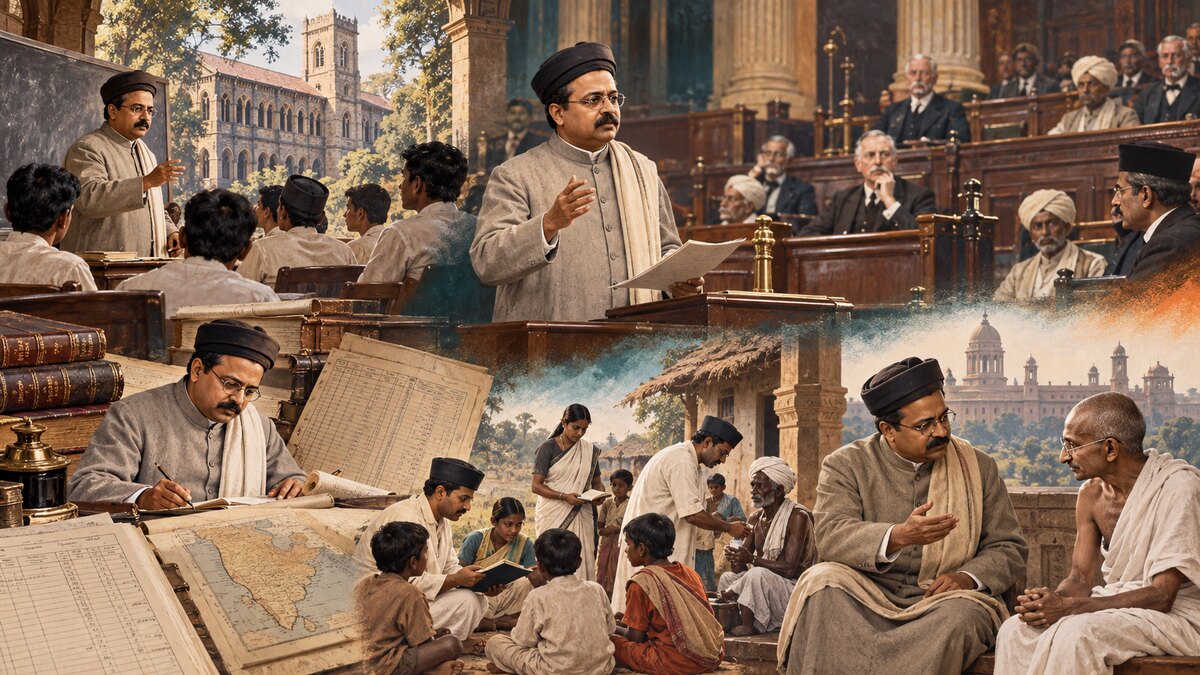
స్వరాజ్యానికి శబ్దం మాత్రమే కాదు—సంస్థ, గణాంకం, శిక్షణ కూడా అవసరం
గోపాలకృష్ణ గోఖలే 9 May 1866న Ratnagiri ప్రాంతంలోని సాధారణ కుటుంబంలో జన్మించారు. తండ్రి మరణం తర్వాత కుటుంబ ఆర్థిక పరిస్థితి కఠినమైనప్పటికీ, అన్నయ్య చేసిన త్యాగంతో చదువు కొనసాగించగలిగారని Congress archival profile నమోదు చేస్తోంది. 1884లో B.A. పూర్తి చేసిన ఆయన Deccan Education Societyతో కలిసి పనిచేశారు; Fergusson Collegeలో బోధించారు.
Ranade ప్రభావం: రాజకీయానికి ఆర్థిక ఆధారం
Justice M.G. Ranade ఆయనకు public lifeలో గురువుగా నిలిచారు. Dadabhai Naoroji యొక్క economic nationalism, Pherozeshah Mehta యొక్క institutional politics కూడా ప్రభావితం చేశాయి. భారత పేదరికాన్ని భావోద్వేగంగా మాత్రమే కాక taxation, military expenditure, irrigation, employment, salt tax, education వంటి budget choicesతో అనుసంధానించి చూడటం ఆయన ప్రత్యేకత.
Welby Commission: evidenceతో సామ్రాజ్యాన్ని ప్రశ్నించడం
British India financesపై విచారణ చేసిన Welby Commission ముందు గోఖలే సమగ్ర evidence సమర్పించారు. Indiaపై expenditure burden, revenue capacity, poverty మధ్య సంబంధాన్ని గణాంకాలతో వివరించారు. Cross-examinationను ఎదుర్కొన్నప్పటికీ తన economic reasoningను నిలబెట్టుకున్నారని institutional accounts చెబుతున్నాయి.
Legislative Council: పరిమిత వేదికను ప్రజల స్వరంగా మార్చడం
1902లో Central Legislative Councilలో ప్రవేశించిన తర్వాత ఆయన budget speeches ప్రత్యేక గుర్తింపు పొందాయి. Army expenditure తగ్గించడం, salt tax ఉపశమనం, Indiansకు government employment, irrigation, technical education మరియు free compulsory primary education కోసం వాదించారు. Councilలో official majority ఉన్నందున ఆయన ప్రతిపాదనలు అన్నీ చట్టాలుగా మారలేదు. అయినా ప్రశ్నలు, resolutions, budget analysis ద్వారా colonial administrationను public reasoningకు లోబరిచారు.
Servants of India Society: నాయకుడి తర్వాత కూడా పని కొనసాగాలి
12 June 1905న Puneలో Servants of India Society స్థాపించారు. దేశసేవను temporary enthusiasmగా కాక disciplined lifetime vocationగా మార్చాలనేది లక్ష్యం. సభ్యులు personal fame, wealth కన్నా education, social welfare, rural and underprivileged communitiesకు సేవ చేయాలని ప్రమాణం చేసేవారు. Freedom movementకు street mobilisationతో పాటు trained public workers అవసరమని గోఖలే భావించారు.
Congress, reform మరియు Gandhi
1889 నుంచి Congressలో పనిచేసిన గోఖలే 1905 Benares sessionకు అధ్యక్షత వహించారు. Constitutional agitation, negotiation మరియు gradual self-governmentను విశ్వసించారు. Gandhi ఆయనను political mentorగా గౌరవించారు. South Africa నుంచి తిరిగి వచ్చిన Gandhiకి Indiaను అర్థం చేసుకోవడంలో గోఖలే మార్గదర్శకత్వం కీలకమైంది.
విమర్శలు మరియు పరిమితులు
గోఖలే gradualismను Tilak వంటి assertive nationalists చాలాసార్లు నెమ్మదిగా, colonial goodwillపై ఎక్కువ నమ్మకంగా విమర్శించారు. Council powers పరిమితమైనవి; reform pace కూడా నెమ్మదిగానే సాగింది. అయినా constitutional spaceను ఉపయోగించి economic critique, education reform మరియు public-service institutions నిర్మించడం తరువాతి ఉద్యమానికి intellectual and organisational foundation ఇచ్చింది.
చివరి దశ మరియు వారసత్వం
అధిక పని, ప్రయాణాలు, public responsibilities మధ్య ఆయన ఆరోగ్యం క్షీణించింది. 19 February 1915న మరణించారు. ఆయన వారసత్వం ఒక్క sloganలో కాదు: evidenceతో వాదించడం, opponentను demonise చేయకుండా policyని challenge చేయడం, successorsను train చేయడం, nation-buildingకు institutions నిర్మించడం.
🌱 మానవ వికాస కోణం
నిజమైన నాయకత్వం తన స్వరాన్ని పెంచడమే కాదు—ఇతరులు ప్రజాసేవ చేయగల వ్యవస్థను నిర్మించడం. గోఖలే మనకు passionకు preparation, criticismకు evidence, politicsకు education, freedomకు service culture అవసరమని గుర్తుచేస్తారు.
🌱 జీవిత పాఠం
దీర్ఘకాల మార్పు కోసం మూడు శక్తులు కలవాలి: నిజాన్ని కొలిచే గణాంకం, దాన్ని చెప్పే ధైర్యం, మన తర్వాత కూడా పని చేసే సంస్థ. తక్షణ applause కంటే lasting public capacity గొప్పది.
Building freedom through evidence, institutions and service
Gopal Krishna Gokhale was born on 9 May 1866 in the Ratnagiri region. After graduating in 1884, he worked with the Deccan Education Society and taught at Fergusson College. M.G. Ranade shaped his public outlook, while Dadabhai Naoroji influenced his economic nationalism.
Economic evidence and legislative work
Gokhale presented detailed evidence on Indian finances before the Welby Commission. In the Central Legislative Council from 1902, his budget speeches challenged heavy military spending, taxation and administrative priorities while advocating irrigation, Indian employment, technical education and free compulsory primary schooling.
Servants of India Society
Founded in Pune on 12 June 1905, the Society aimed to train disciplined workers who would devote their lives to education, social welfare and national service. Gokhale believed self-government required not only protest but capable institutions and prepared citizens.
Method, criticism and legacy
He favoured constitutional agitation and gradual reform. More assertive nationalists criticised this approach as too slow, and colonial councils remained structurally limited. Yet his use of economic analysis, legislative accountability and institution-building influenced Indian public life. Gandhi regarded him as a political mentor.
🌱 Human Development Perspective
Leadership is not merely the power to speak; it is the ability to train others, build trustworthy institutions and connect moral concern with verifiable evidence.
🌱 Life Lesson
Durable reform needs three things: facts that measure injustice, courage that states the case and institutions that continue the work after the founder is gone.
Sources
- Ministry of Culture — Servants of India Society and Gokhale memorial
- Parliament of India — Gopal Krishna Gokhale profile
- Indian National Congress archives — Gokhale biography
- President of India/PIB — Gokhale’s legislative and economic contribution
I Reflect. You Respond.
#MVRTalks #FreedomFighter #GopalKrishnaGokhale #IndianHistory #ServantsOfIndia #HumanDevelopment #IReflectYouRespond