
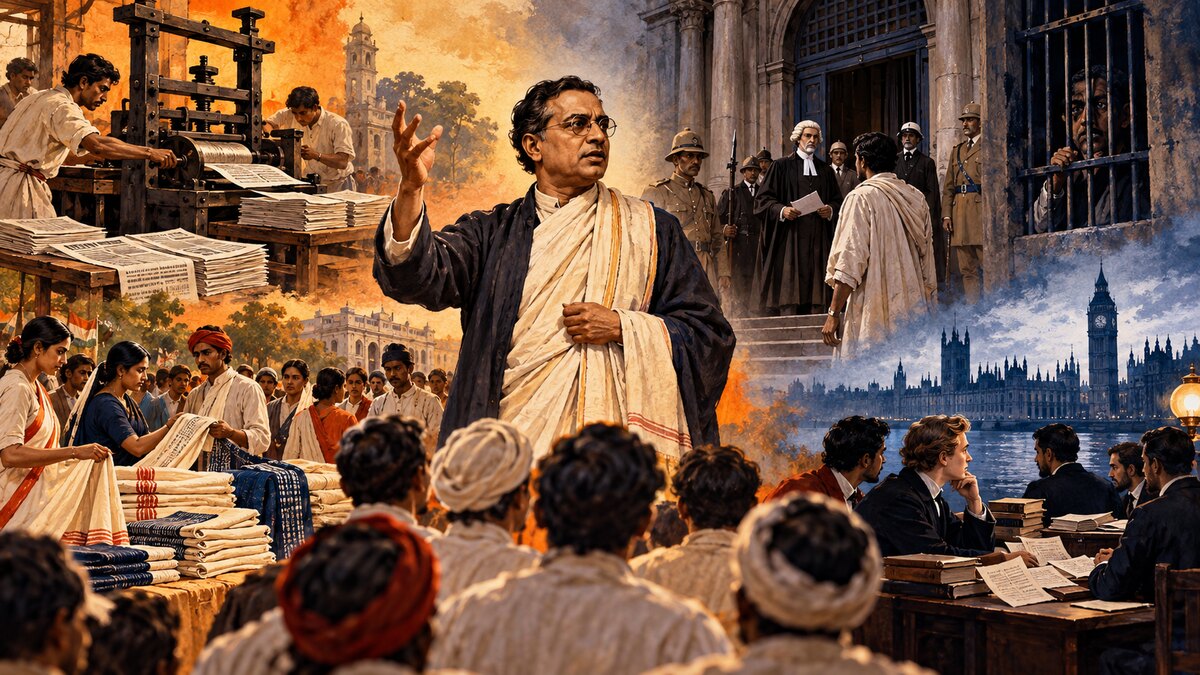
సిల్హెట్ బాలుడి నుంచి జాతీయ స్వరంగా
Bipin Chandra Pal 7 November 1858న Sylhet జిల్లాలోని Poil గ్రామంలో జన్మించారు—అది ఇప్పుడు Bangladeshలో ఉంది. Parliament biographical note ప్రకారం ఆయన English schoolsలో చదివి, 1875లో Presidency Collegeలో చేరారు. Calcuttaలో చదువుతున్న సంవత్సరాల్లో భారతీయ జాతీయ చైతన్యం, Brahmo Samaj ప్రభావం, విస్తృత పఠనం ఆయన ఆలోచనలను తీర్చిదిద్దాయి.
ఆయన career politicsతో మొదలుకాలేదు. 1879లో Cuttackలో school headmasterగా పనిచేశారు. విద్యార్థులకు బోధించడం, library work, journalism—ఇవి ప్రజా జీవితం కోసం ఆయనకు భాష, విశ్లేషణ, persuasion ఇచ్చాయి.
పత్రిక ఒక ఉద్యమ పాఠశాల
Pal Bengali weekly Paridarshakను ప్రారంభించి, Bengal Public Opinion, Lahoreలోని Tribune వంటి పత్రికలతో పనిచేశారు. తరువాత New India, Bande Mataram, Swaraj వంటి publicationsతో nationalismను public argumentగా మార్చారు. PIB record ప్రకారం Bande Mataram English daily 1906లో Pal editorshipలో ప్రారంభమై, Sri Aurobindo joint editorగా చేరారు.
పత్రిక ఆయనకు వార్త చెప్పే సాధనం మాత్రమే కాదు; self-reliance, political consciousness, colonial policy criticismను ప్రజలతో సంభాషించే వేదిక.
1905 Bengal partition—Swadeshi turning point
Bengal partitionకు వ్యతిరేక ఉద్యమంలో Pal leading voice అయ్యారు. Lala Lajpat Rai, Bal Gangadhar Tilakతో కలిసి “Lal-Bal-Pal”గా గుర్తింపు పొందారు. Swadeshi, foreign-goods boycott, national education, self-help ఆయన programmeలో భాగాలు. ఆయనకు Swaraj కేవలం constitutional reform కాదు; ప్రజల ఆర్థిక, సాంస్కృతిక, మానసిక స్వావలంబన.
Refusal, imprisonment, sacrifice
Bande Mataram conspiracy caseలో Aurobindo Ghoshకు వ్యతిరేకంగా evidence ఇవ్వాలని British authorities కోరినప్పుడు Pal నిరాకరించారు. Ministry of Culture record ప్రకారం ఆయన జైలుకు వెళ్లారు; 1908లో విడుదలైనప్పుడు Madras సహా అనేక ప్రాంతాల్లో celebrations జరిగాయి. ఇది నాయకుడి release మాత్రమే కాదు—colonial judicial coercionకు వ్యతిరేక public statement.
Britainలో ప్రచారం, స్వతంత్ర ఆలోచన
Pal Englandలో India House circlesతో సంబంధం కలిగి, Swaraj పత్రిక ద్వారా భారత స్వాతంత్ర్య ఆలోచనను విదేశాల్లో చర్చించారు. అయితే ఆయనను ఒక fixed labelలో పెట్టలేం. కాలంతో ఆయన political methodsపై అభిప్రాయాలు మారాయి; కొన్ని mass movements, leadership choicesతో విభేదించారు. ఈ differencesను “దేశభక్తి తగ్గింది”గా కాదు—independent judgementగా చూడాలి.
Documented-fact boundary: Palను “father of revolutionary thought”గా government profiles పేర్కొంటాయి; అది ఒక honorific assessment. ఆయన అన్ని దశల్లో armed revolutionను మాత్రమే సమర్థించారని అర్థం కాదు. ఆయన ప్రధాన tools speech, journalism, boycott, national education, self-help, political mobilisation.
Strategy and leadership
Pal leadership మూడు స్థాయిల్లో పనిచేసింది: ideaను articulation చేయడం; daily behaviourగా Swadeshiను మార్చడం; personal cost వచ్చినా witnessగా నిలబడటం. ఆయన strength crowdను excite చేయడంలో మాత్రమే కాదు—self-relianceకు intellectual framework ఇవ్వడంలో.
ఎలా గుర్తుంచుకోవాలి?
20 May 1932న Pal మరణించారు. Lal-Bal-Pal triumvirateలో ఆయన పేరు నిలిచినా, ఆయన individual contribution journalism, education, social reform, public oratory, ideological debateలో విస్తృతంగా ఉంది. Freedom movement ఒకే method, ఒకే leader, ఒకే paceతో సాగలేదని ఆయన జీవితం గుర్తుచేస్తుంది.
🌱 మానవ వికాస కోణం
ఒక causeకు loyalty అంటే judgementను surrender చేయడం కాదు. Teamలో ఉండి కూడా strategyపై ప్రశ్నించగలగడం, evidenceకు అనుగుణంగా అభిప్రాయం మార్చడం, pressureలో false testimony ఇవ్వకుండా నిలబడడం—ఇవి moral courage రూపాలు.
🌱 జీవిత పాఠం
స్వతంత్రత ముందుగా మన నిర్ణయంలో మొదలవుతుంది. ఇతరులు ఏమనుకుంటారనే భయంతో నిజాన్ని వక్రీకరించకపోవడం, మన consumptionను valuesతో align చేయడం, wordsను disciplined actionతో కలపడం—ఇవే Pal కథ నేటి జీవితానికి ఇచ్చే పాఠాలు.
Bipin Chandra Pal — Swadeshi, the Press and Independent Judgement
Born on 7 November 1858 in Poil village of Sylhet, Bipin Chandra Pal was shaped by education, wide reading and the Brahmo reform environment. He worked as a headmaster before journalism became his principal instrument of public awakening.
Through publications including Paridarshak, New India, Bande Mataram and Swaraj, Pal connected political freedom with self-reliance, education and public reasoning. The 1905 anti-Partition movement made him a central Swadeshi voice and one of the Lal-Bal-Pal trio.
Refusal and sacrifice
When colonial authorities sought his testimony against Aurobindo Ghosh in the Bande Mataram case, Pal refused and was imprisoned. His 1908 release was celebrated in several parts of India. The episode turned personal refusal into a public challenge to coercive justice.
Independent thought
Pal worked in Britain and continued to write, speak and debate. His views did not remain frozen, and he sometimes differed from dominant nationalist strategies. That complexity matters: loyalty to a cause does not require surrendering judgement.
🌱 Human Development Perspective
Moral courage is not only dramatic protest. It is refusing false testimony, aligning consumption with values, and remaining capable of principled disagreement within one’s own movement.
🌱 Life Lesson
Freedom begins in judgement. Speak with evidence, accept the cost of integrity, and connect inspiring words to disciplined daily action.
Sources
- Parliament of India — Bipin Chandra Pal
- Ministry of Culture — Pal’s release and Swadeshi celebrations
- PIB — Bande Mataram movement and newspaper
- New India Samachar — profile
I Reflect. You Respond.
#MVRTalks #FreedomFighter #BipinChandraPal #Swadeshi #LalBalPal #Journalism #IndianFreedomMovement #LifeLessons #IReflectYouRespond