
తెలుగు
బాల్యం: రాజకీయ వాతావరణంలో పెరిగిన ప్రశ్న
భగత్ సింగ్ 1907లో పంజాబ్ ప్రాంతంలోని బంగా గ్రామంలో జన్మించారు. ఆయన కుటుంబం anti-colonial activityతో ముడిపడి ఉండేది. బాల్యంలోనే బ్రిటిష్ పాలన, జాతీయ ఉద్యమం, త్యాగం అనే పదాలు ఇంటి సంభాషణల్లో వినిపించేవి. 1919 జలియన్వాలా బాగ్ హత్యాకాండ యువతరంపై మిగిల్చిన గాయం ఆయన రాజకీయ అవగాహనకు కూడా నేపథ్యమైంది.
Non-Cooperation Movement పిలుపు సమయంలో ఆయన government-supported schoolను విడిచి Lahore National Collegeలో చేరినట్లు Government of India biography నమోదు చేస్తుంది. అక్కడ history, politics, theatre, language కేవలం subjects కాదు—colonial powerను అర్థం చేసుకునే tools. Kartar Singh Sarabha వంటి గదర్ విప్లవకారుల త్యాగం ఆయనపై ప్రభావం చూపింది.
ఆలోచనల వైపు ప్రవేశం
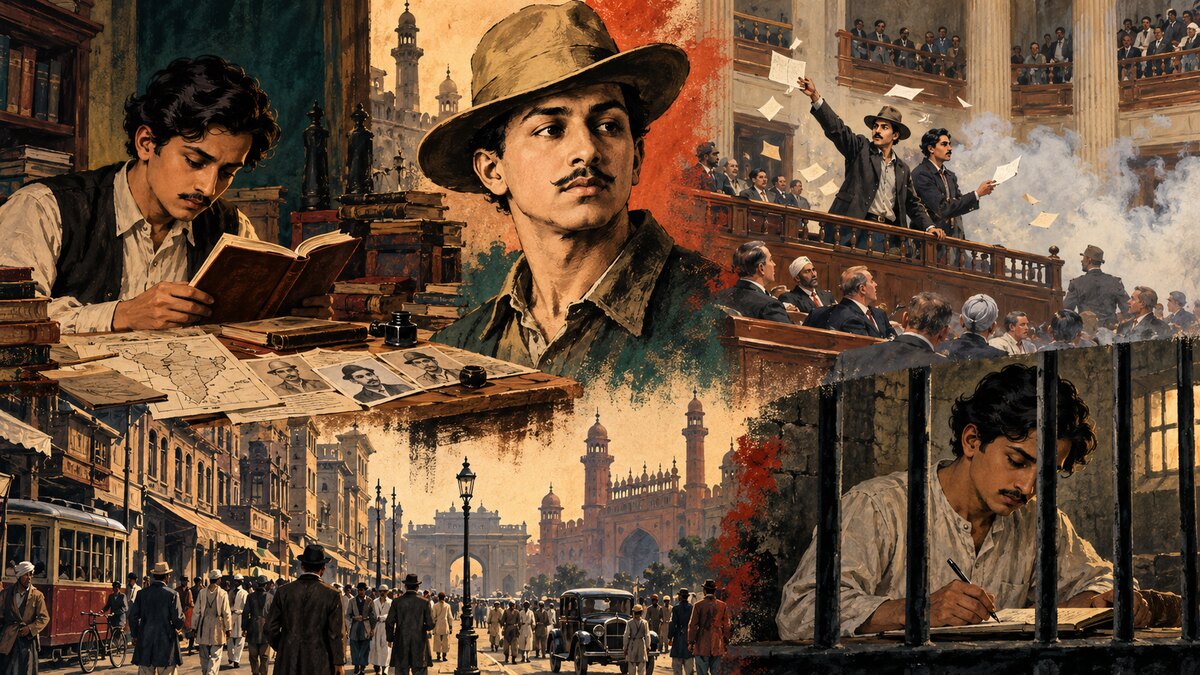
భగత్ సింగ్ను కేవలం తుపాకీ పట్టుకున్న యువకుడిగా చూపడం ఆయన జీవితాన్ని చిన్నచూపు చూడటం. ఆయన చదివారు, రాశారు, debate చేశారు. Nationalismతో పాటు socialism, workers' rights, imperialism, religion, rationalismపై ఆలోచించారు. Naujawan Bharat Sabha వంటి youth organisationలో పనిచేసి, తరువాత Hindustan Socialist Republican Association (HSRA)తో కలిశారు.
ఆయనకు “revolution” అంటే ఒక్క dramatic act కాదు. రాజకీయ అధికార మార్పుతో పాటు exploitative social orderను మార్చే లక్ష్యం ఉండాలి అని prison writingsలో స్పష్టం చేశారు. Government cultural repositoryలో భద్రపరచిన jail writingsపై వివరణ కూడా destructionతోనే revolution ముగియదని ఆయన భావనను చూపుతుంది.
1928: లాలా లజపత్ రాయ్ మరణం మరియు Saunders case
Simon Commissionకు వ్యతిరేకంగా Lahoreలో జరిగిన ప్రదర్శనపై police lathi charge జరిగింది. గాయపడిన Lala Lajpat Rai తరువాత మరణించారు. ప్రతీకారంగా police officer James Scottను లక్ష్యంగా పెట్టుకున్న HSRA planలో mistaken identification వల్ల Assistant Superintendent J. P. Saunders చంపబడ్డాడు. భగత్ సింగ్, రాజ్గురు, చంద్రశేఖర్ ఆజాద్ తదితరులు ఈ operationతో సంబంధం కలిగారు.
ఇది documented revolutionary violence. దాన్ని romanticise చేయకూడదు; అదే సమయంలో colonial repression, political avenues మూసివేత, యువ విప్లవకారుల strategy అనే historical contextను కూడా తొలగించకూడదు. భగత్ సింగ్ తరువాత Lahoreనుంచి తప్పించుకోవడానికి hair cut చేసి disguiseలో ప్రయాణించిన సంఘటన Government cultural repositoryలో నమోదు ఉంది.
Assembly protest: పారిపోకుండా అరెస్టు ఎందుకు?
1929 ఏప్రిల్ 8న Bhagat Singh, Batukeshwar Dutt Central Legislative Assemblyలో bombs విసిరారు. Government sources వాటిని protest కోసం ఉపయోగించిన low-intensity లేదా harmless bombsగా వివరిస్తాయి; Trade Disputes Bill, Public Safety Billకు వ్యతిరేకంగా attention కల్పించడం లక్ష్యం. వారు leaflets చల్లారు, పారిపోకుండా అక్కడే surrender అయ్యారు.
ఈ నిర్ణయం strategyలో turning point. Underground action నుంచి public trial platformకు మారారు. Courtను తమ ideasను దేశానికి తెలియజేసే వేదికగా వాడాలని అనుకున్నారు. అయినప్పటికీ bomb actను non-violent protestతో కలపకూడదు; అది revolutionary violenceలో భాగమే, అయితే mass casualties లక్ష్యం కాదని available records సూచిస్తాయి.
Prison hunger strike: శరీరాన్ని వాదనగా మార్చడం
జైలులో భారతీయ రాజకీయ ఖైదీలకు European prisonersతో పోలిస్తే చెడు ఆహారం, దుస్తులు, చదువు అవకాశాలు ఉన్నాయని వారు నిరసించారు. 1929 hunger strikeలో dignity, better food, clothing, reading material, newspapers, forced menial labour నుంచి రక్షణ వంటి demands పెట్టారు. Government repository ప్రకారం demandsలో చదవడానికి సంబంధించిన అంశాలు కూడా ప్రముఖంగా ఉన్నాయి.
Jatin Das దీర్ఘ నిరాహార దీక్ష తర్వాత మరణించడం దేశవ్యాప్తంగా ఆగ్రహం తెచ్చింది. Hunger strike Bhagat Singhను underground revolutionary నుంచి ప్రజలకు చదివే, వాదించే, sufferingను political communicationగా మార్చే నాయకుడిగా చూపించింది.
రచనలు: జైలు గోడల మధ్య విస్తరించిన ప్రపంచం
Bhagat Singh prison notebook, letters, essaysలో అనేక రచయితలు, philosophers, revolutionaries ఆలోచనలను నమోదు చేశారు. ఆయనకు పుస్తకం escape కాదు; argumentకు సాధనం. “Why I Am an Atheist” వంటి రచనలో తనపై వచ్చిన vanity accusationకు rational self-examinationతో సమాధానం ఇచ్చారు. ఈ రచనలను ఆయన చర్యలకు తరువాత జోడించిన decorationగా కాదు, ఆయన రాజకీయ వ్యక్తిత్వం యొక్క కేంద్రంగా చూడాలి.
Trial, execution, historical significance
Lahore Conspiracy Caseలో Bhagat Singh, Sukhdev, Rajguruకు death sentence విధించారు. 1931 మార్చి 23న వారిని ఉరితీశారు. అప్పటికి Bhagat Singh వయసు 23. వారి execution దేశవ్యాప్తంగా తీవ్ర భావోద్వేగాన్ని రేపింది; youth politicsపై దీర్ఘకాల ప్రభావం చూపింది.
ఒక historical precision అవసరం: ఆయన చివరి క్షణాల గురించి అనేక popular stories ఉన్నాయి—ఏ పుస్తకం చదివారు, exact last words ఏమిటి, executionకు ముందు ఏ పాట పాడారు మొదలైనవి. వాటిలో అన్నింటికీ సమాన archival support లేదు. అందువల్ల ఈ వ్యాసం well-documented events, writingsపై ఆధారపడుతుంది; popular traditionను factగా ప్రకటించదు.
Strategy మరియు leadership
- Study before slogan: ఆయన movement languageను విస్తృత readingతో నిర్మించారు.
- Symbolic action: Assembly protestలో publicity, surrender, trial—మూడింటినీ ఒక communication strategyగా కలిపారు.
- Collective identity: ఆయన ఒంటరి hero కాదు; HSRA colleagues, prison comrades, student networksలో భాగం.
- Personal risk: strategy consequencesను ఇతరులపై వదిలి పారిపోలేదు.
- Ideas beyond independence: political freedomతో పాటు social and economic justiceను ప్రశ్నించారు.
🌱 మానవ వికాస కోణం
Bhagat Singh జీవితం youth intensityను disciplined thinkingతో కలపగల శక్తిని చూపుతుంది. కానీ lesson violenceను అనుకరించడం కాదు. నేటి ప్రజాస్వామ్యంలో బాధ్యతాయుత dissent, evidence, writing, organising, constitutional actionకు ప్రాధాన్యం ఇవ్వాలి. ఆయన నుంచి తీసుకోవాల్సింది ప్రశ్నించే ధైర్యం, చదివే క్రమశిక్షణ, తన beliefsను self-critique చేసే intellectual honesty.
🌱 జీవిత పాఠం
ఆవేశం ఒక క్షణాన్ని కదిలించగలదు; ఆలోచన తరాలను కదిలిస్తుంది. న్యాయం కోసం నిలబడాలంటే courageతో పాటు study, clarity, consequences స్వీకరించే బాధ్యత అవసరం.
ప్రతిబింబ ప్రశ్న: మీరు నమ్మే cause కోసం social-media reactionకంటే ఎక్కువగా—చదవడం, evidence సేకరించడం, disciplined action చేయడం—ఎంతవరకు సిద్ధంగా ఉన్నారు?
English
Early life and formative influences
Bhagat Singh was born in 1907 in Banga in the Punjab region, into a family connected with anti-colonial activity. The political climate of Punjab, the memory of Jallianwala Bagh and the example of Ghadar revolutionaries formed part of his early world. A Government of India biography records that he left a government-supported school during the Non-Cooperation Movement and joined Lahore's National College.
From nationalism to organised revolutionary politics
He read, wrote and debated widely. Through the Naujawan Bharat Sabha and later the Hindustan Socialist Republican Association, he connected national freedom with questions of workers, imperialism and social transformation. His prison writings show that revolution, in his view, required a constructive ideal beyond the destruction of an existing order.
Saunders case and the turn to public protest
After Lala Lajpat Rai was injured in a police lathi charge during protests against the Simon Commission and later died, HSRA members planned retaliation against police officer James Scott. Because of mistaken identification, J. P. Saunders was killed. Bhagat Singh, Rajguru, Chandrashekhar Azad and others were connected with the operation. This was documented revolutionary violence. It should neither be romanticised nor detached from the colonial repression and closed political space in which the strategy emerged.
On April 8, 1929, Bhagat Singh and Batukeshwar Dutt threw low-intensity bombs in the Central Legislative Assembly to protest the Public Safety and Trade Disputes bills. They distributed leaflets and surrendered instead of escaping. The act was designed to create a public trial and political platform; available government accounts emphasise that mass casualties were not the objective. It was still a violent act and should not be described as ordinary non-violent protest.
Prison struggle and writings
In prison, the revolutionaries protested unequal treatment of Indian political prisoners. Their hunger-strike demands included food, clothing, dignity, reading material, newspapers and relief from degrading labour. Jatin Das died after a prolonged fast, turning prison conditions into a national issue.
Bhagat Singh's notebooks, letters and essays reveal an intellectual life that was central—not decorative—to his politics. In writings such as “Why I Am an Atheist,” he examined belief, vanity, reason and responsibility. He treated reading as equipment for argument and self-criticism.
Execution and memory
Bhagat Singh, Sukhdev and Rajguru were sentenced to death in the Lahore Conspiracy Case and executed on March 23, 1931. Bhagat Singh was 23. Their deaths transformed them into enduring symbols of youthful resistance.
Many popular stories surround his final hours, including precise last words, songs and the book in his hands. Not all have equal archival support. This account therefore centres documented events and writings, separating history from later legend where the evidence is uncertain.
🌱 Human Development Perspective
Bhagat Singh demonstrates how youthful intensity can be joined to disciplined thought. The lesson is not to imitate violence. In a democracy, responsible dissent should prioritise evidence, writing, organising and constitutional action. What remains relevant is the courage to question, the discipline to study and the intellectual honesty to examine one's own beliefs.
🌱 Life Lesson
Passion can move a moment; an idea can move generations. Standing for justice requires courage, study, clarity and responsibility for consequences.
Reflective question: For a cause you believe in, are you prepared to do more than react—to read, gather evidence and act with discipline?
Sources
- Azadi Ka Amrit Mahotsav, Ministry of Culture — Bhagat Singh
- Press Information Bureau — biographical note on Bhagat Singh
- Ministry of Culture Digital District Repository — prison writings and hunger strike
- Government of India statement on Shaheed Bhagat Singh
I Reflect. You Respond.
#MVRTalks #FreedomFighter #BhagatSingh #IndianFreedomMovement #YouthLeadership #HumanDevelopment #LifeLessons #IReflectYouRespond