
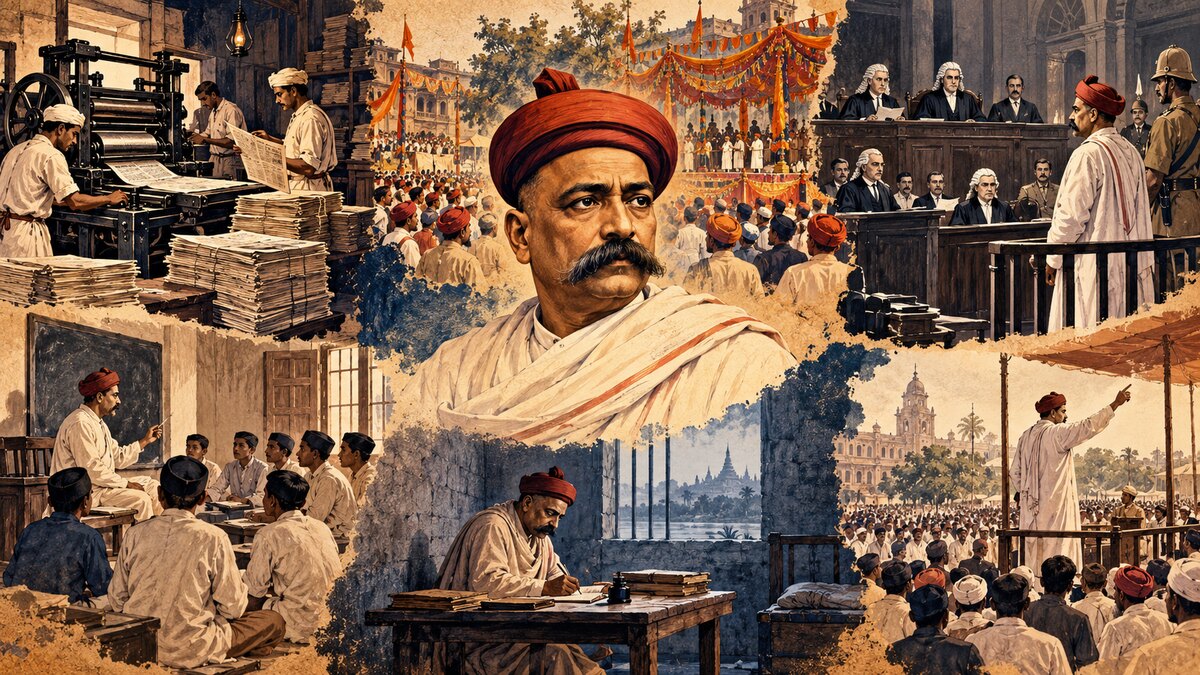
స్వరాజ్యాన్ని సభల పదం నుంచి ప్రజల నినాదంగా మార్చిన ప్రయాణం
కేశవ గంగాధర్ తిలక్—తరువాత దేశం “లోకమాన్య”గా పిలిచిన నాయకుడు—1856 జూలై 23న మహారాష్ట్రలోని రత్నగిరి ప్రాంతంలో జన్మించాడు. ఆయన తండ్రి సంస్కృత పండితుడు, ఉపాధ్యాయుడు. కుటుంబంలో విద్యకు ఉన్న గౌరవం, అన్యాయాన్ని సహించని స్వభావం తిలక్ వ్యక్తిత్వాన్ని తీర్చిదిద్దాయి.
విద్య: ఉద్యోగానికి కాదు—జాతీయ చైతన్యానికి
పూణే Deccan Collegeలో mathematicsతో BA పూర్తిచేసి, 1879లో law degree పొందాడు. ప్రభుత్వ ఉద్యోగం భద్రమైన మార్గం అయినప్పటికీ, భారతీయుల చేతుల్లో ఆధునిక విద్య ఉండాలని భావించాడు. సహచరులతో New English School, తరువాత Deccan Education Society నిర్మాణంలో భాగమయ్యాడు. Educationను employment ladderగా మాత్రమే కాక political awakeningకు infrastructureగా చూశాడు.
Kesari మరియు The Mahratta
1881లో Marathiలో Kesari, Englishలో The Mahratta పత్రికలను ప్రారంభించిన బృందంలో తిలక్ కీలకుడు. Famine, land revenue, colonial administration, ప్రజల హక్కులపై ఆయన రచనలు public opinionను కదిలించాయి. 1896 famine సమయంలో రైతుల కష్టాలను రాజకీయ చర్చలోకి తెచ్చి, relief మరియు revenue concessions కోసం వాదించాడు.
Cultureను public organisationగా మార్చడం
Ganapati celebrations, Shivaji commemorationsకు public form ఇచ్చి, ప్రజలు కలుసుకునే political spaceను విస్తరించాడు. ఇది mobilisationలో innovative strategy. అదే సమయంలో religious-cultural symbolism అందరినీ సమానంగా చేర్చిందా అనే ప్రశ్నపై historians చర్చిస్తారు. ఈ అంశాన్ని hero worshipలో దాచకుండా, ఆయన legacyలోని సంక్లిష్టతగా చూడాలి.
Moderatesతో విభేదాలు
Petitions మరియు gradual reformకంటే boycott, swadeshi, national education, mass pressure అవసరమని తిలక్ నమ్మాడు. Lal–Bal–Pal నాయకత్వం Congressలో assertive nationalismకు ప్రతీకగా మారింది. 1907 Surat splitలో strategy, leadershipపై విభేదాలు తీవ్రతరమయ్యాయి.
Sedition trials మరియు Mandalay
Colonial government ఆయన writingsను seditionగా విచారించింది. 1897లో శిక్ష, 1908లో మరొక trial తరువాత ఆరు సంవత్సరాల transportation to Mandalay విధించారు. Bombay High Court archive ఈ trialsకు సంబంధించిన recordsను సంరక్షిస్తోంది. Mandalay imprisonmentలో తిలక్ Gita Rahasya రచించి, action-oriented interpretationను అభివృద్ధి చేశాడు.
Home Rule: తిరిగి వచ్చిన నాయకుడు
1914లో విడుదలైన తరువాత ఆయన mass politicsకు తిరిగివచ్చాడు. 1916లో Belgaumలో Home Rule Leagueను ప్రారంభించి Maharashtra, Karnataka, Berar, Central Provincesలో tours, lectures, multilingual pamphlets ద్వారా self-government demandను విస్తరించాడు. Annie Besant leagueతో ప్రాంతాలు వేరైనా common objective ప్రజా చర్చను వేగవంతం చేసింది.
“Swaraj” అనే political vocabulary
తిలక్ Swarajను దూరమైన idealగా కాక ప్రజల హక్కుగా వివరించాడు. ఆయనకు ఆపాదించబడిన ప్రసిద్ధ slogan తరతరాలను ప్రేరేపించింది. 1920 ఆగస్టు 1న Bombayలో ఆయన మరణించినప్పుడు విస్తృత ప్రజా శోకం ఆయన mass connectionను చూపింది.
Strategy మరియు leadership
- Education ద్వారా long-term capacity.
- Newspapers ద్వారా continuous argument.
- Festivals, meetings ద్వారా public participation.
- Legal trialsను colonial policyపై public debateగా మార్చడం.
- Imprisonment తర్వాత కూడా organisationను పునర్నిర్మించడం.
చారిత్రక ప్రాధాన్యం
తిలక్ Indian nationalismను educated elitesకే పరిమితం కాకుండా wider publicకు తీసుకెళ్లిన నాయకుల్లో ప్రముఖుడు. ఆయన methods, social positionsపై విమర్శనాత్మక చర్చ అవసరం; అయినప్పటికీ self-ruleను mass political demandగా మార్చిన పాత్రను విస్మరించలేం.
🌱 మానవ వికాస కోణం
ఒక idea ప్రజల శక్తిగా మారాలంటే మూడు స్థాయిలు అవసరం: knowledge, communication, organisation. తిలక్ classroom, press, public platformలను కలిపాడు. Resilience అంటే శిక్షను భరించడం మాత్రమే కాదు—వెనుకడుగు తర్వాత కొత్త organisational formతో తిరిగి రావడం.
🌱 జీవిత పాఠం
నమ్మిన ఆలోచనకు భాష, వేదిక, సంస్థ ఇవ్వగలిగితేనే అది ఉద్యమమవుతుంది. Courageకు critical self-examination జత కావాలి; అప్పుడే leadership inclusive మరియు lasting అవుతుంది.
English version
Bal Gangadhar Tilak was born in 1856 in the Ratnagiri region. Educated in mathematics and law, he rejected the safety of government service and helped build Indian-led educational institutions. He treated education as infrastructure for national awakening.
Through Kesari and The Mahratta, he wrote on famine, revenue, rights and colonial rule. Public Ganapati and Shivaji commemorations expanded political participation, though historians also debate the inclusiveness of religious-cultural mobilisation. That complexity should remain part of an honest assessment.
Tilak advocated swadeshi, boycott, national education and mass pressure. Sedition prosecutions culminated in his 1908 transportation to Mandalay, where he wrote Gita Rahasya. After release, he founded a Home Rule League in 1916 and helped turn Swaraj into a popular political demand.
🌱 Human Development Perspective
Ideas become movements when knowledge, communication and organisation reinforce one another. Tilak connected the classroom, printing press, courtroom and public meeting. His resilience lay not only in enduring imprisonment, but in rebuilding organisation afterward.
🌱 Life Lesson
A conviction needs language, platforms and institutions before it can influence society. Courage must also include the willingness to examine whether one’s methods include those beyond one’s immediate constituency.
Sources
- Parliament of India — Lokmanya Bal Gangadhar Tilak profile
- Bombay High Court — Tilak trials archive
- Ministry of Culture — Establishment of Tilak’s Home Rule League
- Ministry of Culture — Kesari and peasant mobilisation
I Reflect. You Respond.
#MVRTalks #FreedomFighter #BalGangadharTilak #Swaraj #Kesari #HomeRule #IndianHistory #LifeLesson #IReflectYouRespond